

Artemis II Crew Returns to Earth After Historic Lunar Mission
Artemis II crew return 2026
OFF THE COAST OF SAN DIEGO — Humanity’s return to the lunar vicinity reached a triumphant conclusion on Friday, April 10, 2026, as the Artemis II crew safely splashed down in the Pacific Ocean. The Orion spacecraft, named Integrity, hit the water at approximately 5:07 p.m. PDT, marking the successful end of a 10-day mission that took four astronauts further into deep space than any human in history.
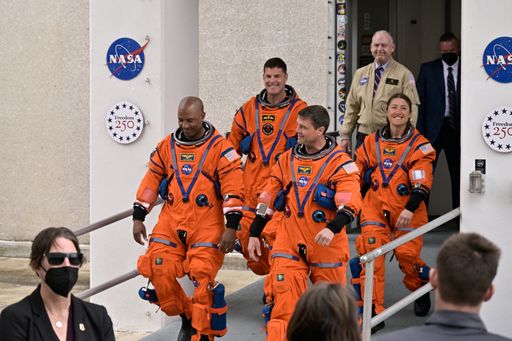
The crew—NASA astronauts Reid Wiseman, Victor Glover, and Christina Koch, along with Canadian Space Agency astronaut Jeremy Hansen—were met with a hero’s welcome by U.S. Navy and NASA recovery teams. According to official mission updates from NASA, the capsule’s descent was slowed by a perfect deployment of its three massive main parachutes, ensuring a gentle landing after a high-stakes atmospheric re-entry that reached temperatures of nearly 5,000 degrees Fahrenheit.
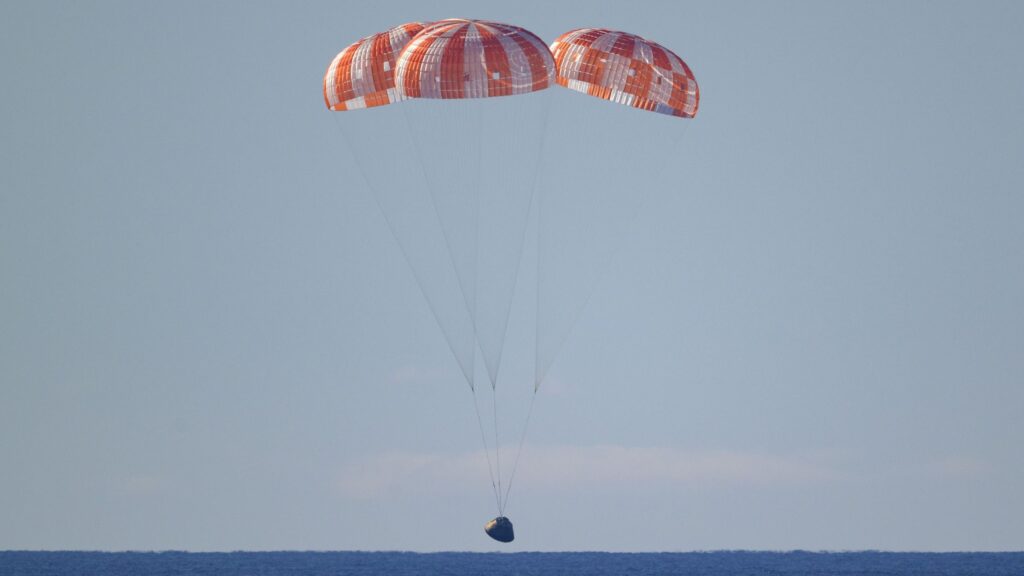
The recovery operation was a precision exercise involving the USS John P. Murtha and specialized Navy dive medical teams. Senior Chief Hospital Corpsman Laddy Aldridge was the first to greet the astronauts upon opening the hatch, performing initial medical assessments while the crew remained inside the floating craft. Following the “bull’s eye” splashdown, the quartet was airlifted by helicopter to the recovery ship, where they were greeted with cheers from hundreds of sailors and engineers.
As reported by Al Jazeera, this mission represents the first time humans have traveled to the moon’s far side since the Apollo era, breaking the distance record previously held by Apollo 13. The crew spent their final hours in space stowing gear and reflecting on a journey that saw them capture unprecedented high-resolution imagery of the lunar surface and “earthsets” from deep space.
Technically, the mission served as a rigorous validation of the Orion spacecraft’s life-support systems and heat shield durability. During the 1.1 million-kilometer journey, the crew conducted various proximity operations and system tests designed to pave the way for future lunar landings. Commander Reid Wiseman noted during a final bridge call that the bond between the four astronauts was “forged in the stars,” particularly during their loop around the moon’s far side on April 6.
According to analysis from The Japan Times, the data brought back by the crew is considered “the good stuff” that will inform the Artemis III mission, which aims to land the first woman and person of color on the lunar surface. The success of this flight confirms that the Space Launch System (SLS) and Orion are ready for the complexities of long-duration lunar exploration.
The global impact of Artemis II has been compared to the early days of the space race, though with a distinct focus on international cooperation and diversity. President Donald Trump spoke with the crew shortly after their recovery, congratulating them on making history and stating they had made the nation “incredibly proud.” As the crew begins a period of medical observation and debriefing in Houston, the focus of the global space community now shifts toward the construction of the Lunar Gateway and the upcoming Artemis III landing currently slated for 2028.
As detailed by Space.com, the images and stories shared by Koch, Glover, Wiseman, and Hansen have already begun to inspire a new generation of explorers who see the moon not just as a distant object, but as a viable destination for the human spirit.