

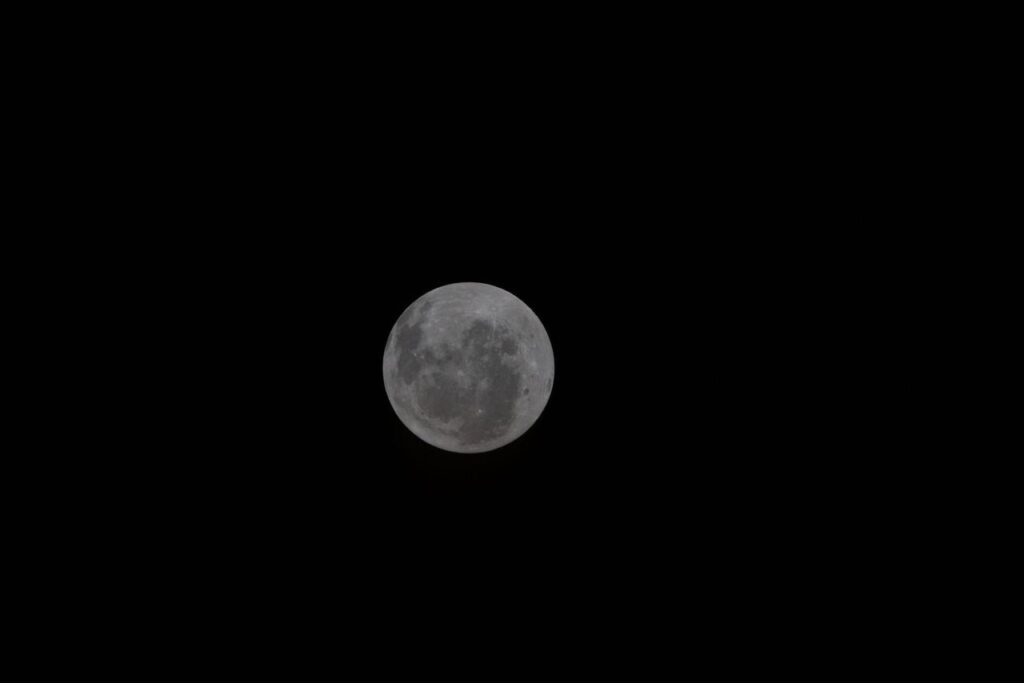
Artemis II Crew Captures New Image of Lunar Far Side
Artemis II far side moon photo 2026
NASA officials released a groundbreaking high-resolution photograph on Sunday, April 5, 2026, captured by the Artemis II crew as they began their final approach toward the lunar far side. The image prominently features the Orientale Basin, a massive impact crater often referred to as the moon’s “bullseye” due to its striking concentric ring structures. This geological feature, located on the western limb of the moon, is rarely visible in such detail from Earth and serves as a primary scientific target for the mission.
Mission specialist Christina Koch described the sight as a moment of “collective joy” for the four-person crew, noting that seeing the basin with human eyes for the first time since the Apollo era was a profound privilege. According to reporting from NASA, the photograph was taken during the late stages of Flight Day 5 as the Orion spacecraft continued its journey toward its maximum distance from Earth.
The crew, consisting of Commander Reid Wiseman, Pilot Victor Glover, and Mission Specialists Christina Koch and Jeremy Hansen, is currently on track to complete their historic lunar flyby on Monday, April 6. This maneuver will bring the Orion spacecraft within approximately 4,600 miles of the lunar surface, marking the closest humans have come to the moon in over fifty years.
The mission trajectory utilizes a “free-return” path, designed to use the moon’s gravity to naturally slingshot the capsule back toward Earth without requiring a major engine burn. As detailed by the Guardian, the Artemis II astronauts are set to break the record for the farthest distance humans have ever traveled from Earth, officially surpassing the milestone set by the Apollo 13 mission in 1970. This flight represents a critical validation of the Space Launch System and the Orion capsule’s life support systems before the upcoming Artemis III mission.
In addition to their photography duties, the crew spent the weekend performing essential system checks and testing the performance of their next-generation spacesuits in microgravity. These tests are vital for ensuring that the hardware can handle the rigors of deep space exploration and future surface operations. According to mission updates from Space.com, the astronauts also prepared for a rare celestial event involving a solar eclipse visible from their unique vantage point beyond the moon.
The science team at Mission Control has assigned 35 different lunar surface targets for the crew to observe and document during the flyby. The data and images collected over the next twenty-four hours will provide unprecedented insights into the lunar far side, which has remained largely unexplored by human observers for half a century. The Orion spacecraft is scheduled to splash down in the Pacific Ocean on Friday, April 10, concluding the first crewed lunar mission of the 21st century.