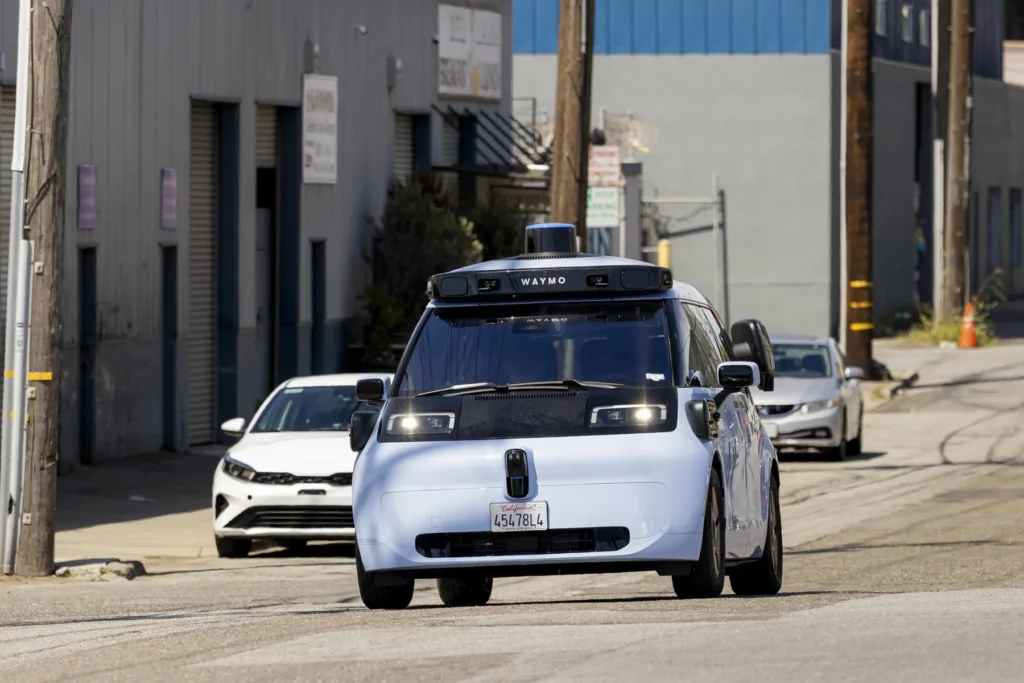
Waymo Debuts Ojai Robotaxi for Public Rides
Waymo Ojai robotaxi public rollout
Waymo has officially begun deploying its purpose-built autonomous vehicle, the Ojai, for public ride-hailing service. The company announced the rollout on Thursday, May 28, 2026, marking the first time the Zeekr-manufactured, all-electric minivan has been made available to the public. Initially offered to select riders in San Francisco, Los Angeles, and Phoenix, the launch represents a significant evolution in Waymo’s fleet strategy, transitioning from retrofitted consumer vehicles to a platform engineered specifically for autonomous operation.
The Ojai minivan features a design focused on rider-first accessibility, including a flat floor, low step-in height, and elevator-style doors. Inside, the cabin is equipped with three large LED screens that allow passengers to customize their environment, including climate and music controls. To ensure inclusivity, the vehicle also debuts integrated accessibility features such as embedded braille and screen-reader compatibility. Waymo executives, including co-CEO Dmitri Dolgov, have highlighted the vehicle’s purpose-built nature as a key factor in improving the economics of the ride-hailing service, noting that it allows for more efficient sensor placement and lower production costs.
This deployment also introduces the sixth-generation Waymo Driver, the company’s most advanced autonomous system to date. The new sensor suite—which utilizes fewer, higher-resolution cameras than previous models—is designed to enhance capability while simultaneously reducing mechanical complexity. According to company statements, the Ojai is the first vehicle platform to debut this system, which Waymo claims will eventually allow for operations in more diverse environments, including areas prone to extreme winter weather.
The partnership with Zeekr, a premium electric-vehicle brand owned by China’s Geely, has drawn scrutiny regarding U.S.-China supply chain dynamics. While the base vehicle is manufactured in China and shipped to the United States, Waymo installs its proprietary sensors and software at its specialized facility in Mesa, Arizona. The company plans to scale production at the Arizona factory toward a capacity of tens of thousands of units per year to support its national expansion goals.
While the initial Ojai rides in the pilot cities are being provided free of charge to gather user feedback, Waymo is concurrently maintaining its paid commercial operations in cities across California, Arizona, and Texas, utilizing its existing fleet of Jaguar I-PACE vehicles. As the Ojai rollout progresses, Waymo plans to welcome more riders over the coming months and expand the new vehicle’s footprint to additional markets, including Denver, Las Vegas, and San Diego, later this year. For ongoing updates on Waymo’s fleet expansion and commercial operations, monitor the company’s official service announcements.