

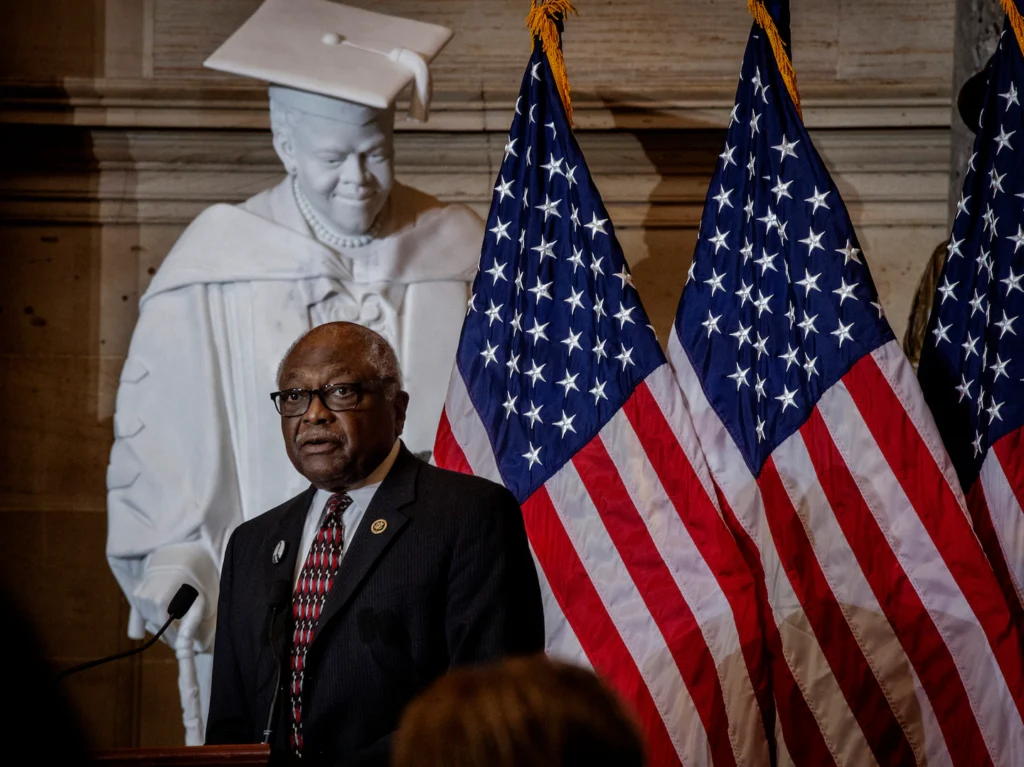
SC Republicans Defy Trump, Block Plan to Erase Clyburn Seat
South Carolina redistricting 2026 Clyburn
South Carolina state senators effectively killed an aggressive mid-decade redistricting effort on Tuesday, May 12, 2026, that sought to dismantle the state’s only Democratic-held congressional district.
In a significant act of defiance against President Donald Trump, five Republicans joined all 12 Senate Democrats to defeat a procedural motion that would have allowed the legislature to redraw the map after the regular session concludes this week. The 29-17 vote fell just two votes short of the two-thirds majority required to advance the measure.
The proposed plan, which had already cleared the South Carolina House of Representatives, was specifically designed to target the 6th Congressional District held by Representative Jim Clyburn, with the ultimate goal of securing a 7-0 Republican sweep of the state’s delegation.
The rebellion within the GOP ranks was led by Senate Majority Leader Shane Massey, who argued that the push for a 7-0 map was an “extremely risky” gamble that could ultimately backfire on the party.
During an extraordinary floor speech, Massey cautioned that the current 6-1 Republican advantage is stable and constitutional, whereas the proposed “7-0 Republican map” relied on unreliable data that could unintentionally create two competitive districts for Democrats.
He explicitly warned that “tinkering” with the maps could improve the chances of Hakeem Jeffries becoming Speaker of the House by inadvertently aiding Democratic turnout. Massey’s stance highlights a growing tactical divide within the Republican party between those prioritizing maximum partisan gain and those favoring the legal stability of the existing boundaries.
The legislative showdown in Columbia followed intense pressure from the Trump administration, with the president reportedly making personal phone calls to state leaders and posting urgent messages on Truth Social encouraging them to “be bold and courageous.” National Republicans have been racing to capitalize on recent U.S. Supreme Court rulings that narrowed federal oversight of state redistricting processes.
However, the defeat in the South Carolina Senate represents a rare legislative check on this nationwide momentum. Civil rights organizations, including the South Carolina NAACP, praised the Senate’s decision, arguing that the effort to eliminate the 6th District was a blatant attempt to dilute the voting power of the state’s Black residents and undermine long-standing democratic representation.