
Putin Denounces NATO During Scaled-Back Victory Day Parade
Putin Victory Day 2026 NATO speech
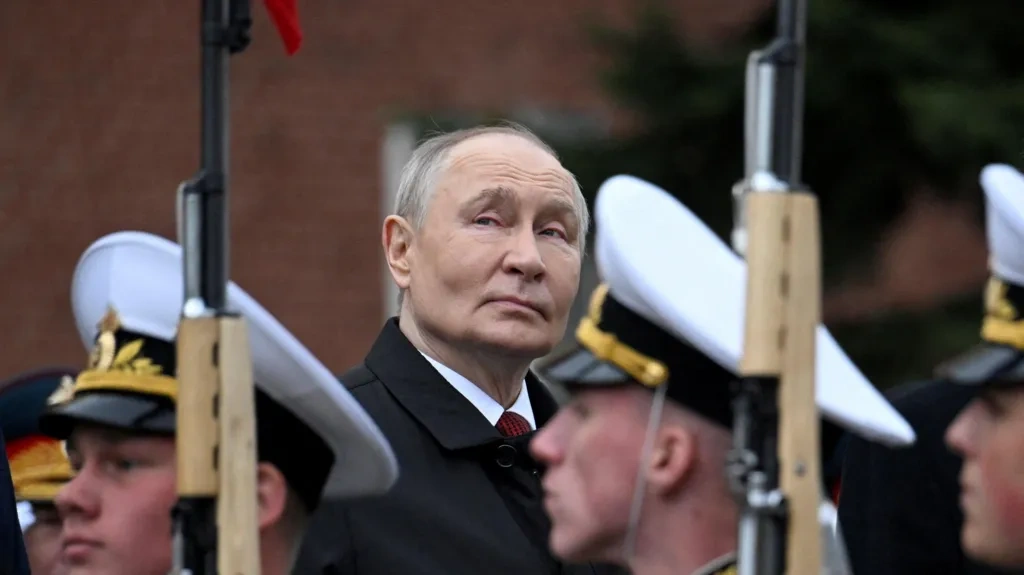
President Vladimir Putin delivered a combative address during Russia’s annual Victory Day celebrations on May 9, 2026, marking the 81st anniversary of the Soviet triumph over Nazi Germany. Speaking from a heavily fortified Red Square, the Russian leader framed the ongoing conflict in Ukraine as a defensive struggle against an “aggressive force” backed and armed by the entire NATO alliance.
Putin asserted that the current generation of soldiers carrying out the “special military operation” is inspired by the heroic feats of their ancestors who fought in World War II. Despite the defiant rhetoric, the ceremony was notably scaled back compared to previous years, reflecting the significant security challenges and military strain currently facing the Kremlin. For the first time in nearly two decades, the traditional display of heavy military hardware, including tanks and intercontinental ballistic missiles, was entirely absent from the parade grounds.
The decision to strip the event of its usual armored pageantry was reportedly driven by heightened fears of Ukrainian long-range drone strikes and the “current operational situation” on the front lines. In place of live missile launchers, state television broadcast pre-recorded footage of Russia’s nuclear-powered submarines and latest drone technology on massive digital screens. Security across Moscow was unprecedented, with authorities disabling mobile internet and messaging services throughout the capital to prevent potential disruptions.
Despite these tensions, the parade took place under a fragile three-day ceasefire brokered by U.S. President Donald Trump, which also facilitated a major exchange of 1,000 prisoners between Russia and Ukraine. The temporary truce, set to last until May 11, provided a brief humanitarian pause in the fighting as both nations honored their respective fallen soldiers.
A limited number of foreign dignitaries attended the event, including Belarusian President Alexander Lukashenko and representatives from Kazakhstan, Uzbekistan, and Laos. Notably, a column of North Korean soldiers participated in the march for the first time, signaling the deepening military ties between Moscow and Pyongyang.
While Putin insisted that “Victory has always been and will always be ours,” the shortened 45-minute ceremony underscored the grinding nature of a war that has now outlasted the Soviet Union’s entire campaign against the Axis powers.
Economic observers noted that the muted atmosphere and the lack of physical hardware reflect growing public fatigue and the intense pressure of international sanctions. As the ceasefire window remains open, international diplomats are closely watching to see if this temporary pause can be leveraged into more substantial peace negotiations.