

Top Republicans Slam Trump’s Plan to Withdraw 5,000 Troops From Germany
Trump Germany troop withdrawal Republican concern May 2026
Two high-ranking Republican lawmakers issued a startling joint statement on Saturday, May 2, 2026, expressing deep concern over the Trump administration’s decision to withdraw approximately 5,000 troops from Germany. Senator Roger Wicker (R-Miss.) and Representative Mike Rogers (R-Ala.), who chair the Senate and House Armed Services Committees respectively, warned that the move risks “undermining deterrence and sending the wrong signal” to Russian President Vladimir Putin.
The lawmakers argued that rather than removing the forces from the European continent entirely, the U.S. should consider repositioning the brigade further east to strengthen NATO’s flank. According to official reports from Reuters, the joint rebuke underscores a widening rift within the Republican party regarding the President’s “unilateral” approach to transatlantic security.
The Pentagon’s formal withdrawal order, issued by Defense Secretary Pete Hegseth on Friday, follows a week of escalating diplomatic tensions between President Donald Trump and German Chancellor Friedrich Merz. The friction peaked on Monday when Merz publicly claimed the United States was being “humiliated” by Iranian leadership during negotiations to end the two-month-old war in the Middle East.
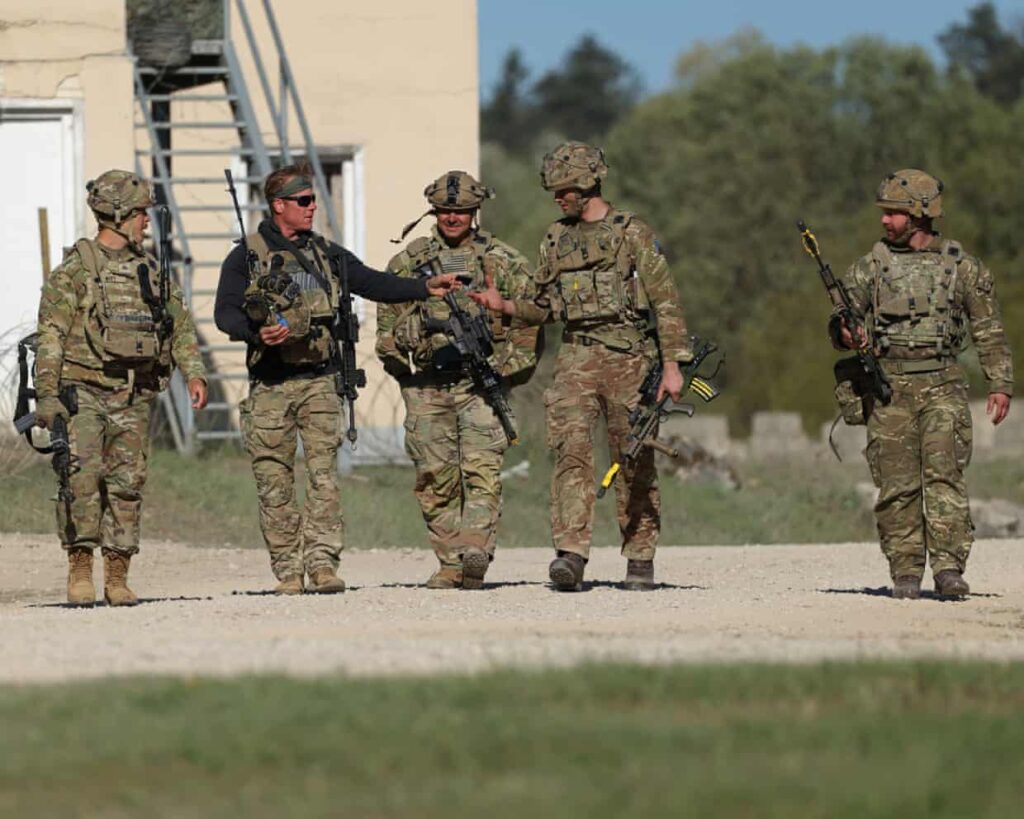
President Trump responded by questioning the value of the U.S. military presence in Germany, suggesting that a drawdown was necessary because Berlin had failed to meet defense spending targets. The Guardian reports that the planned reduction would remove about 14% of the 36,000 American service members currently stationed in the country, with the process expected to take between six and twelve months to complete.
The announcement has caught NATO allies off guard, with alliance spokesperson Allison Hart stating that they are currently “working with the U.S. to understand the details” of the decision. While the German government has sought to downplay the severity of the move as “anticipated,” the timing—amid an active conflict with Iran—has drawn sharp criticism from defense hawks on both sides of the aisle.
Wicker and Rogers emphasized in their statement that any significant change to the U.S. military posture in Europe must be coordinated with Congress and international partners. As noted by Breaking Defense, the withdrawal also includes the cancellation of a long-range fires battalion deployment that had been planned for later this year, further signaling a retrenchment of American commitments in the region.