
JD Vance Says Iran Rejected Peace Terms as Islamabad
JD Vance Iran peace talks Islamabad
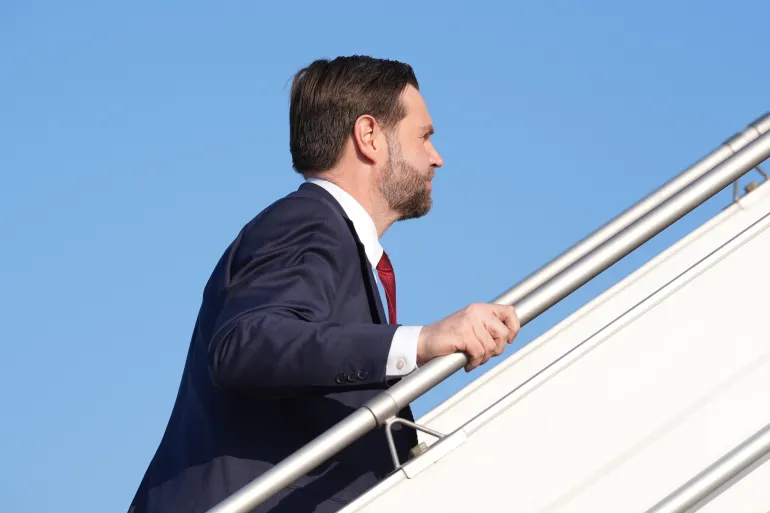
United States Vice President JD Vance and the American delegation departed from Pakistan on Sunday after failing to reach a peace agreement with Iran. The high-stakes marathon negotiations lasted for twenty-one hours at the Serena Hotel in Islamabad but concluded without a formal breakthrough. Vance announced shortly before boarding Air Force Two that the Iranian delegation had chosen not to accept the terms presented by Washington.
He characterized the outcome as a significant missed opportunity for Tehran and emphasized that the lack of an agreement would impact Iran more severely than the United States. The Vice President confirmed that he maintained constant communication with President Donald Trump throughout the intensive session. Despite the diplomatic impasse, Vance stated that the United States has made its red lines very clear to the international community. You can find more details on the sudden conclusion of the summit in this report on the failed Islamabad peace talks.
The primary point of contention during the summit centered on Iran’s nuclear capabilities and future development plans. Vance explained that the United States required an affirmative commitment that Tehran would not seek nuclear weapons or the tools necessary to build them. He described these requirements as a core goal for the Trump administration and a non-negotiable aspect of any potential ceasefire.
The American delegation, which included senior advisers Jared Kushner and Steve Witkoff, presented what they described as a flexible and final offer to their counterparts. However, the American side indicated that they have yet to see a fundamental commitment from Iran to forgo its nuclear ambitions. This failure to reach a consensus means that the current maritime restrictions in the region will likely remain in place for the foreseeable future. For a deeper look at the specific American demands, visit our analysis of the US negotiation strategy.
Iranian officials offered a sharply different perspective on the collapse of the negotiations by blaming unreasonable American demands. State broadcaster IRIB reported that the Iranian delegation negotiated intensively but faced excessive requests that blocked any real progress. Foreign Ministry spokesperson Esmaeil Baqaei noted that the Iranian team did not necessarily expect a comprehensive deal to emerge from the very first meeting. He stressed that success in future rounds would depend entirely on the seriousness of the United States and its willingness to respect Iranian interests.
Tehran highlighted that the discussions covered various dimensions including war reparations, the lifting of economic sanctions, and the security of the Strait of Hormuz. Despite the public disagreement, some Iranian posts on social media suggested that technical experts might still exchange documents in the coming days. Further information on the Iranian response can be found in our coverage of Tehran’s official statement.
The Islamabad summit was a historic event as it marked the highest-level direct engagement between the two nations since the 1979 revolution. Pakistani Prime Minister Shehbaz Sharif served as the primary mediator for the talks and worked to bridge the deep-seated differences between the two adversaries. The international community had hoped the meeting would lead to a permanent resolution of the six-week war that has disrupted global energy markets.
While the immediate talks have ended, the presence of both delegations in a neutral third country signaled a temporary shift toward diplomacy over military action. President Trump previously commented that the United States had already achieved its strategic objectives regardless of the summit’s final outcome. As the US delegation returns to Washington, observers are now focusing on whether a second round of talks will be scheduled. You can follow the latest developments on regional security through our live crisis updates.