
Inland Empire Shaken by 3.4-Magnitude Earthquake
Inland Empire earthquake Loma Linda
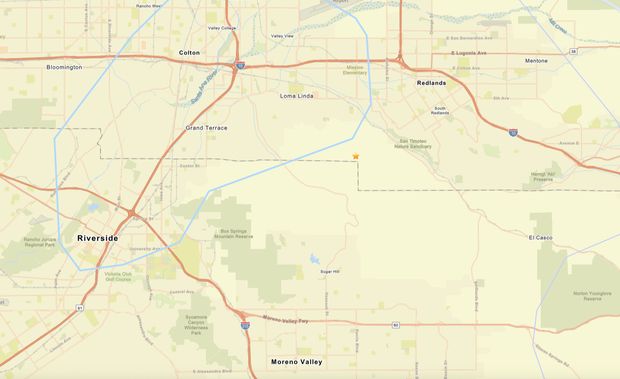
A 3.4-magnitude earthquake rattled the Inland Empire late Wednesday night, followed quickly by a secondary tremor that measured 2.7 in magnitude. The United States Geological Survey reported that the initial seismic event occurred at approximately 8:48 p.m. on April 29, 2026. Data from the agency placed the epicenter roughly two and a half miles southeast of Loma Linda and about three and a half miles from the city of Redlands.
The primary quake originated at a depth of nearly 10 miles beneath the surface, which is considered a relatively shallow depth that often results in more noticeable shaking for residents in the immediate vicinity. According to the USGS “Did You Feel It?” reporting tool, hundreds of residents across San Bernardino and Riverside counties submitted real-time observations of the vibration.
Most reports described the shaking as light to moderate, lasting for several seconds before the arrival of the smaller aftershock less than a minute later.
The 2.7-magnitude aftershock occurred in nearly the same location at a depth of approximately nine and a half miles, further startling local communities.
Despite the double tremor, local law enforcement and fire departments in both Riverside and San Bernardino counties confirmed that there were no immediate reports of structural damage or physical injuries. Emergency management officials noted that while these magnitudes are unlikely to cause significant harm, they serve as a critical reminder of the region’s active seismic nature.
Geologists highlighted that damage typically does not occur until a quake reaches a magnitude of 4.0 or higher, but smaller clusters can sometimes indicate movement along local fault lines. The double event on Wednesday follows a similar 3.4-magnitude earthquake that struck near Cabazon earlier in the week, illustrating a period of increased minor activity throughout Southern California.
Seismologists continue to monitor the region for any additional aftershocks or larger events as residents are encouraged to maintain their earthquake preparedness kits. The California Department of Public Health reminded citizens of the “Drop, Cover, and Hold On” protocol which remains the most effective way to prevent injury during any shaking event.
This latest sequence of tremors has once again brought attention to the complex network of fault lines underlying the Inland Empire, including the nearby San Jacinto and San Andreas systems. While the recent activity did not result in an emergency declaration, authorities emphasize that public reporting through official channels provides invaluable data for refining future seismic risk assessments. For continued updates on the seismic activity in Southern California and detailed maps of the epicenter, residents can visit CBS News and Asatu News.