Trump Warns Oman Over Hormuz Deal Interference
Trump threat to Oman Strait of Hormuz
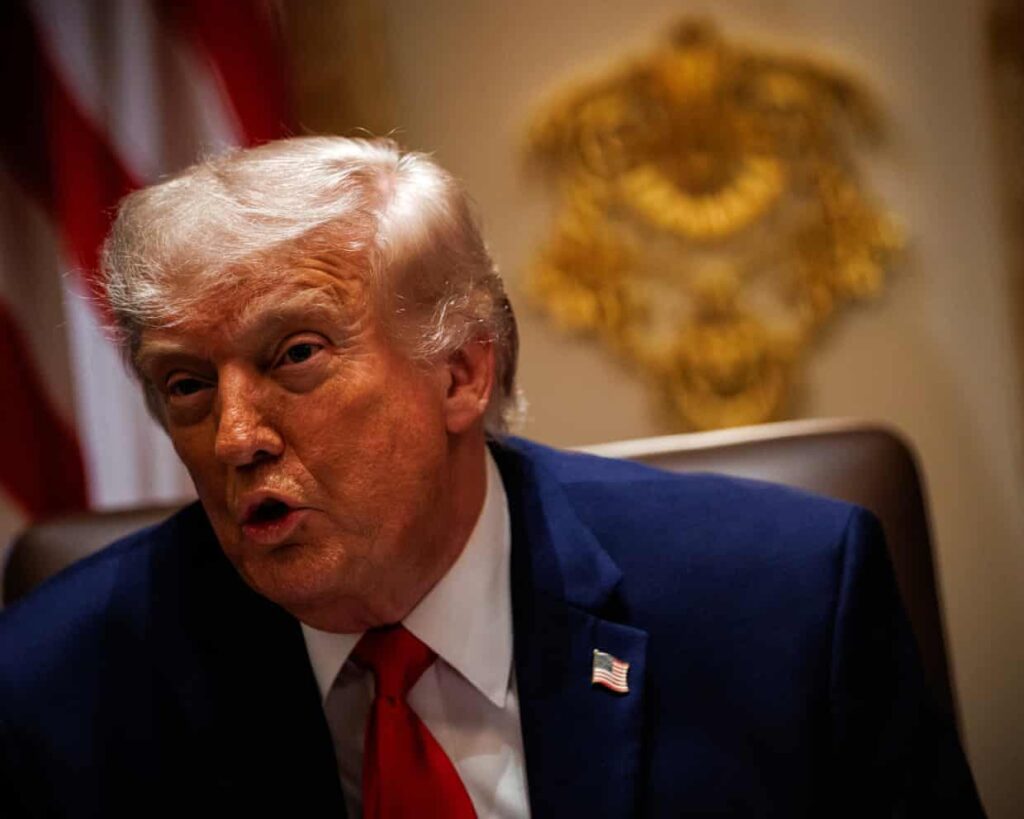
United States President Donald Trump issued a provocative warning to Oman on Wednesday, May 27, 2026, threatening potential military action if the Gulf nation attempts to collaborate with Iran to assert control over the Strait of Hormuz. During a cabinet meeting at the White House, Trump was asked whether he would accept a temporary arrangement that allowed Iran and Oman to jointly manage shipping and traffic through the strategic waterway. Rejecting the notion, the President stated, “Nobody is going to control it. It’s international waters, and Oman will behave just like everybody else, or we will have to blow them up.”
The comments have drawn significant global attention, particularly given Oman’s long-standing status as a key U.S. ally and a consistent, neutral mediator in regional conflicts. While the White House did not provide immediate clarification on whether the President intended to direct his rhetoric toward Iran—with whom tensions remain high—the U.S. State Department later disseminated the transcript of the remarks as stated, including the explicit reference to Oman. The threat comes amid a fragile atmosphere in Doha, where high-level U.S. and Iranian delegations are currently engaged in intensive negotiations to reach a peace framework aimed at ending the three-month-old conflict and reopening the vital energy corridor.
Reports circulating in Iranian state media had suggested that a potential draft memorandum of understanding under discussion included provisions for joint Iranian-Omani management of the strait. The White House has firmly dismissed these reports as “a complete fabrication,” insisting that the United States remains committed to maintaining the strait as an open, international waterway. President Trump reiterated his administration’s position that while negotiations are ongoing, he is in no rush to finalize a deal, stating that the U.S. is “not satisfied” with the current offers on the table.
The diplomatic friction underscores the mounting pressure to resolve the crisis, which has kept global energy prices volatile and shipping traffic in the Gulf significantly below pre-war levels. Although Oman has not formally sought to take control of the strait, the President’s blunt rhetoric signals a shift in the administration’s stance toward regional mediation efforts. As negotiators continue their work in Qatar, the international community remains focused on whether such hardline messaging will impede the path toward a sustainable settlement or catalyze a final agreement.