

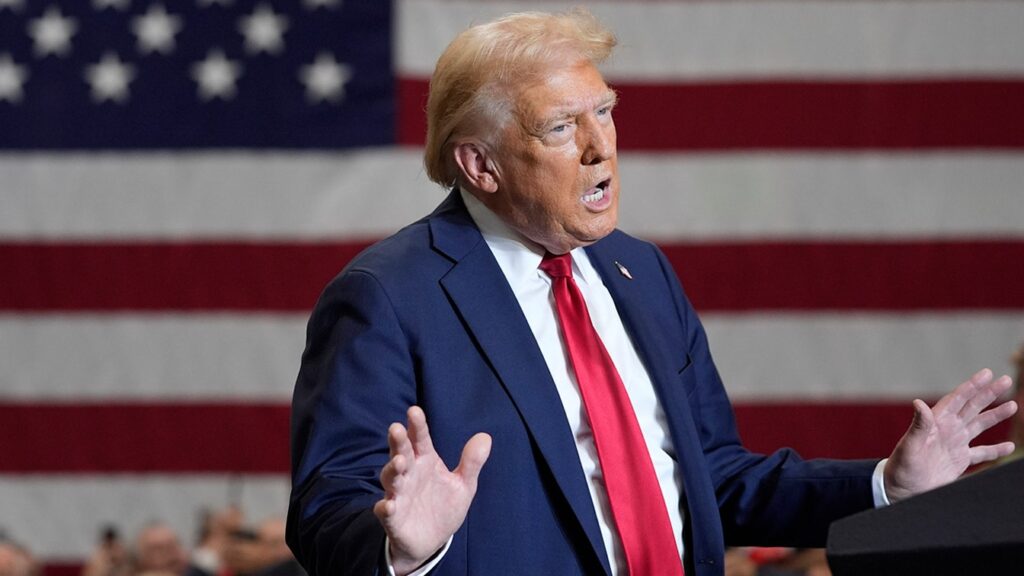
🇺🇸 Trump Vows to ‘Absolutely’ Revoke Citizenship of Naturalized Criminals, Citing Need for Legal Authority
President Donald Trump announced his firm commitment to revoke the United States citizenship of naturalized immigrants who are convicted of serious crimes, conditioning his ability to do so on the limits of current legal authority. Speaking to reporters on Monday, the President stated that if the power exists within the Constitution and federal law, he would “absolutely” pursue the denaturalization of individuals who obtained citizenship through legal processes but later engaged in serious criminal activity. This declaration follows the administration’s continuous focus on strengthening immigration enforcement and utilizing the denaturalization process as a key component of its domestic security strategy.
The President’s comments immediately renewed a complex legal debate surrounding the process of denaturalization, which is the revocation of U.S. citizenship. Under current U.S. law, established by decades of Supreme Court precedent, citizenship for naturalized persons can only be revoked through a judicial order and primarily when it can be proven in federal court that the citizenship was “unlawfully procured.” This typically requires the government to demonstrate that the individual obtained citizenship by concealing a material fact or by willful misrepresentation, such as lying about a prior criminal conviction or a disqualifying affiliation during the naturalization application process. Simply committing a crime after lawful naturalization is generally not sufficient grounds for revocation under current law.
The Department of Justice, or DOJ, under the Trump administration has already directed its attorneys to “prioritize and maximally pursue” denaturalization proceedings, focusing on categories that include war crimes, terrorism, and financial fraud. While the administration has prioritized the use of civil proceedings to revoke citizenship in cases where fraud is suspected, the process must still be approved by a federal judge, and the government must meet a high burden of proof. Legal experts maintain that the President cannot unilaterally revoke citizenship, as the Constitution limits the government’s ability to forcibly deprive a naturalized American of their citizenship unless it was fraudulently or illegally obtained in the first place.