
WWI Soldiers Identified in Belgium and France
missing WWI soldiers identified
The Commonwealth War Graves Commission and the Ministry of Defence have confirmed the formal identification of several soldiers who were previously missing in action during World War One. In a significant announcement on April 28, 2026, the Australian Department of Defence revealed that the remains of Second Lieutenant Duncan McKenzie and Private Roy Martin have been identified more than a century after their deaths.
Second Lieutenant McKenzie, who served with the 38th Battalion, was killed in October 1917 during the Third Battle of Ypres in Belgium. Private Martin of the 30th Battalion fell during the Battle of Fromelles in July 1916 and was among the remains recovered from a mass grave at Pheasant Wood in 2009. These identifications were made possible through a combination of DNA analysis and meticulous historical research, providing long-awaited closure for their descendants.
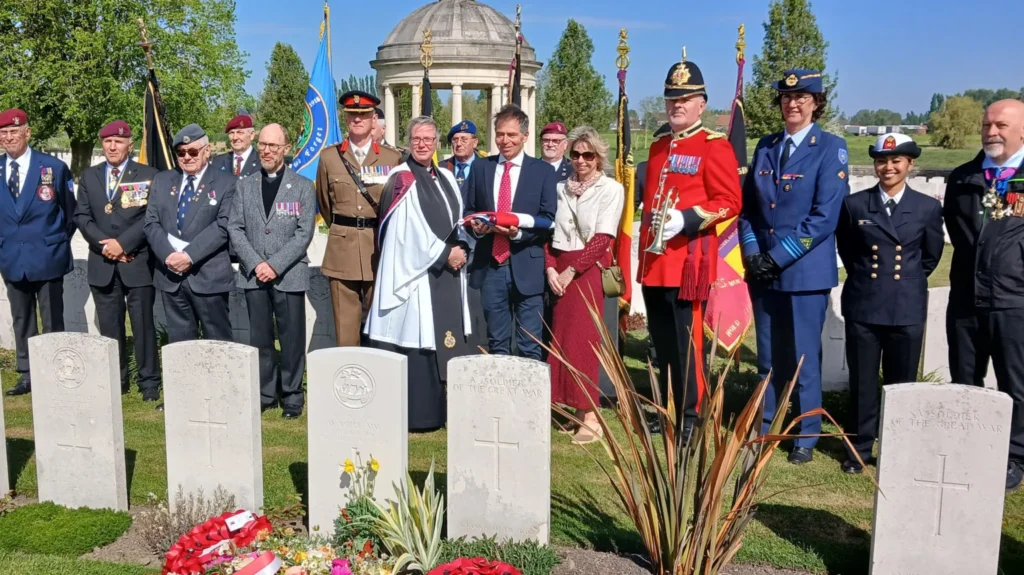
In tandem with these findings, a series of rededication services took place in Belgium and France this week for British soldiers whose graves were recently identified. On April 29, 2026, Captain Gordon Cuthbert and Lieutenant Leslie Harvey of the Middlesex Regiment were honored with named headstones at Tyne Cot Cemetery and Sanctuary Wood Cemetery, respectively. Both officers were killed in April 1915 during the early stages of the war.
These ceremonies followed the rededication of Lieutenant George Kenneth Steinberg MC of the Machine Gun Corps on April 23 at the Croisilles British Cemetery in France. The ongoing work of the “War Detectives” from the Joint Casualty and Compassionate Centre continues to resolve the status of thousands of soldiers who remain recorded as missing. You can find more details on these identifications and upcoming services at the Official GOV.UK Ministry of Defence site and the Australian Defence News.
The identification process remains a core mission for international war graves organizations, which have now successfully named over 20,640 servicemen through the Non-Commemoration Programme. As of April 2026, the programme has reached its fifth annual milestone, integrating advanced forensic technologies into mainstream military archives.
These efforts ensure that every soldier, regardless of the time elapsed since their sacrifice, is eventually recognized by name rather than remaining an “unknown” casualty. Military officials have emphasized that time does not diminish the obligation to honor these individuals with the dignity of a named grave. Future ceremonies are planned throughout 2026 as more DNA results from ongoing archaeological excavations in former battlefields are verified against historical enlistment records.