
Virginia Midterms Key to House Control
Virginia 2026 House elections
The state of Virginia has emerged as a central battleground in the national struggle for control of the U.S. House of Representatives as the 2026 midterm elections approach. With Republicans currently holding a razor-thin majority of 217 to 213, Democrats view the Commonwealth’s 11 congressional districts as a primary path to reclaiming the speaker’s gavel. Political analysts suggest that the results in Virginia will serve as an early indicator of national voter sentiment regarding the current administration’s policies.
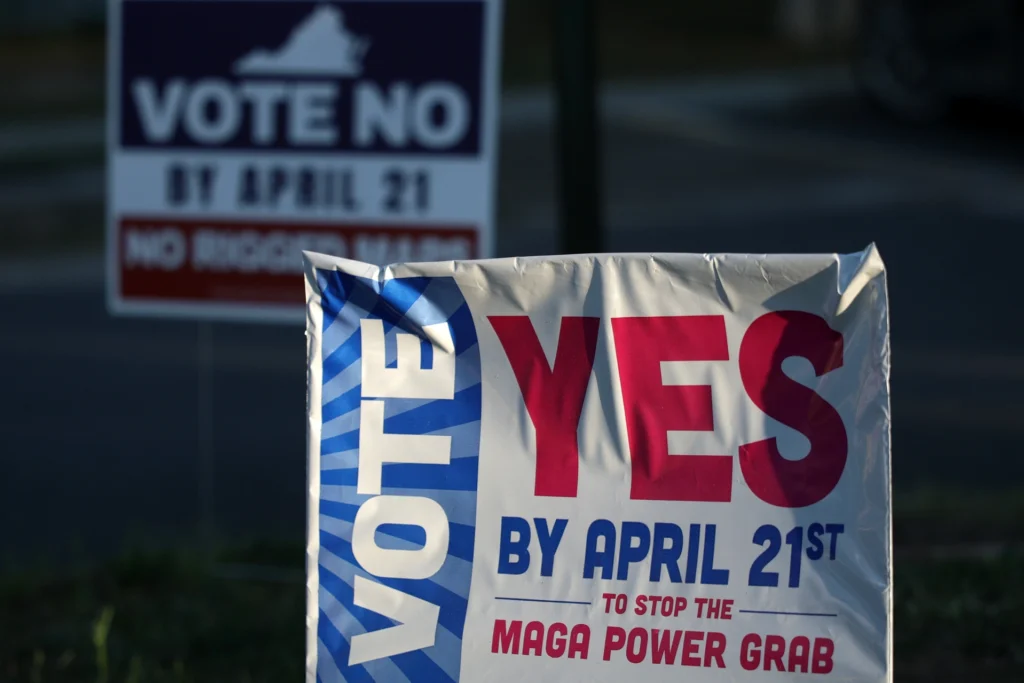
On Tuesday, April 21, 2026, Virginia voters are casting ballots in a high-stakes referendum on a constitutional amendment that could allow for mid-decade redistricting. This measure, supported by Governor Abigail Spanberger and the Democratic-led General Assembly, could fundamentally alter the state’s political map before the November elections. Updated coverage on the redistricting vote can be found through the Virginia Public Access Project website.
The competitive nature of Virginia’s 2nd Congressional District remains a focal point for both major parties. Incumbent Republican Jen Kiggans is facing a rigorous challenge in a district that has historically swung between parties. Major political forecasting groups, including The Cook Political Report, have rated the race as a tossup, highlighting its importance in the broader fight for the House.
Former Representative Elaine Luria is among the prominent figures seeking to challenge Kiggans in what is expected to be one of the most expensive races in the country. Both parties are pouring significant resources into television advertising and grassroots mobilization across the Virginia Beach area. Detailed polling data and candidate profiles are available for review on the Ballotpedia 2026 election portal.
Beyond the coastal 2nd District, other regions of the state are seeing increased political activity and shifting demographics. In the 1st District, veteran Republican Rob Wittman is facing a more competitive environment than in previous cycles as Northern Virginia’s influence continues to expand southward. Meanwhile, Democrats are working to defend recently flipped seats in the Richmond and Northern Virginia suburbs.
The outcome of these races will likely hinge on turnout among independent voters and the impact of the ongoing redistricting legal battles. Experts at Sabato’s Crystal Ball suggest that even minor shifts in these districts could have profound consequences for the national balance of power. As the primary season nears, the intensity of the campaign is expected to grow, making Virginia a definitive theater for the 2026 political landscape.