
Supreme Court Rules Against Rastafarian Inmate in Hair Policy Dispute
Supreme Court Rastafarian dreadlocks ruling
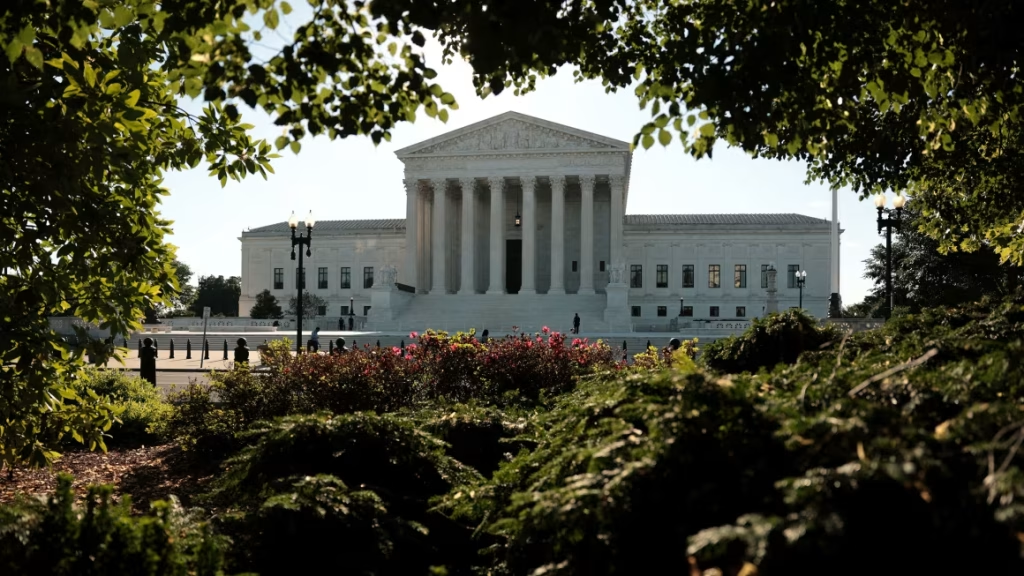
The U.S. Supreme Court ruled on Tuesday, June 23, 2026, against a Rastafarian inmate who challenged a state prison policy that mandated the mandatory cutting of his dreadlocks upon entry. In a 6-3 decision, the Court held that the prison’s grooming policy, which requires short hair for all incarcerated individuals, does not violate the Religious Land Use and Institutionalized Persons Act (RLUIPA) or the First Amendment. The majority opinion argued that the policy is essential for maintaining institutional safety, specifically citing concerns regarding the concealment of contraband and the mitigation of security threats within the prison environment.
The case centered on the religious significance of dreadlocks in the Rastafarian faith, where hair is considered a spiritual manifestation. The plaintiff, who had argued that his forced grooming constituted a substantial burden on his religious practice, sought an exemption based on previous precedents that have protected the rights of inmates to maintain religious symbols. However, the Court’s ruling establishes a narrower interpretation of what constitutes a “least restrictive means” in the context of prison security, effectively granting correctional facilities broader discretion to implement uniform grooming standards.
Justice Sotomayor, writing in the dissent, expressed concern that the ruling undermines critical protections for religious expression in carceral settings, arguing that the state failed to provide sufficient evidence that less restrictive alternatives—such as frequent searches—could not have achieved the same security goals. The decision marks a significant shift in how federal courts weigh institutional security needs against the religious exercise of inmates, potentially impacting ongoing litigation in various states regarding religious accommodations for dietary, grooming, and clothing requirements.
Legal analysts suggest that this ruling will provide state corrections departments with a stronger legal defense against challenges to uniform policies. While the Court emphasized that this decision is specific to the grooming requirements at issue, it signals a trend toward deference to prison administrators in matters of security and discipline. The plaintiff’s legal team stated they are reviewing the opinion to determine if there are remaining avenues for appeal or legislative action at the state level.