

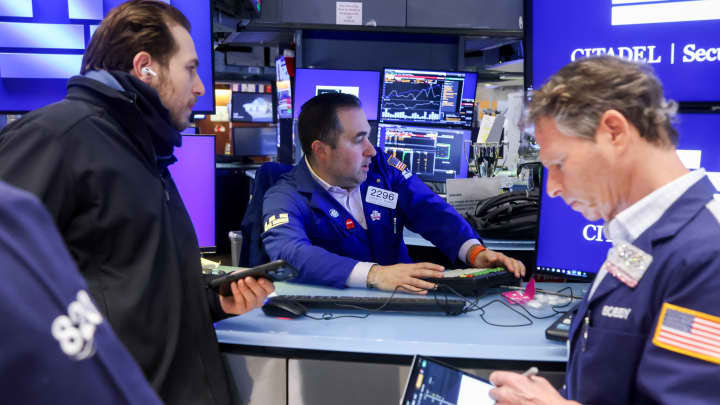
S&P 500 Rises as Wall Street Extends Rebound Despite Oil Volatility
S&P 500 rise March 17 2026 market rebound
U.S. equity markets continued their cautious recovery on Tuesday, March 17, 2026, as investors attempted to look past the immediate volatility of the Iran conflict and focus on underlying corporate resilience. Following its strongest single-session gain since the start of the war on Monday, the S&P 500 added 0.7% in early trading, while the Dow Jones Industrial Average advanced over 400 points. The market’s positive momentum comes despite a renewed climb in energy prices, with Brent crude rising back above $102 per barrel as the blockade of the Strait of Hormuz enters its third week. According to market analysis from Forex.com, the ability of stocks to maintain these gains amidst heightened geopolitical tension suggests a growing belief that the U.S. economy can withstand the current energy shock.
The travel and technology sectors served as the primary engines for Tuesday’s gains, providing a much-needed counterbalance to rising fuel costs. Delta Air Lines surged 5% after raising its first-quarter revenue guidance, citing an acceleration in travel demand from both business and household consumers that has largely offset the spike in jet fuel prices. This optimism lifted the broader airline industry, with United and American Airlines also posting significant gains. Meanwhile, technology heavyweight Nvidia continued to underpin the S&P 500, rising nearly 1% after CEO Jensen Huang projected that the revenue opportunity for artificial intelligence chips could reach $1 trillion by 2027. Financial reports indicate that the “AI-linked” rally has helped the broader market remain within 4% of its record high, even as the geopolitical landscape remains fluid.
Despite the buoyant mood on Wall Street, the Federal Reserve’s two-day policy meeting remains a critical focal point for investors. With the central bank set to announce its interest rate decision on Wednesday, traders are closely monitoring updated growth and inflation forecasts for signs of how the “energy shock” might delay anticipated rate cuts. While current market data suggests a virtually zero percent chance of a rate cut this month, the rise in the 10-year Treasury yield to 4.20% reflects ongoing concern that a prolonged conflict could force the Fed to maintain a “higher-for-longer” stance. Economists at Moody’s warned that a recession remains a significant risk if the Strait of Hormuz stays closed for several more weeks, potentially stalling the recent rally if inflation figures begin to exceed expectations.