
Iran Denies Direct Peace Talks with US in Islamabad
Iran denies direct US talks Islamabad
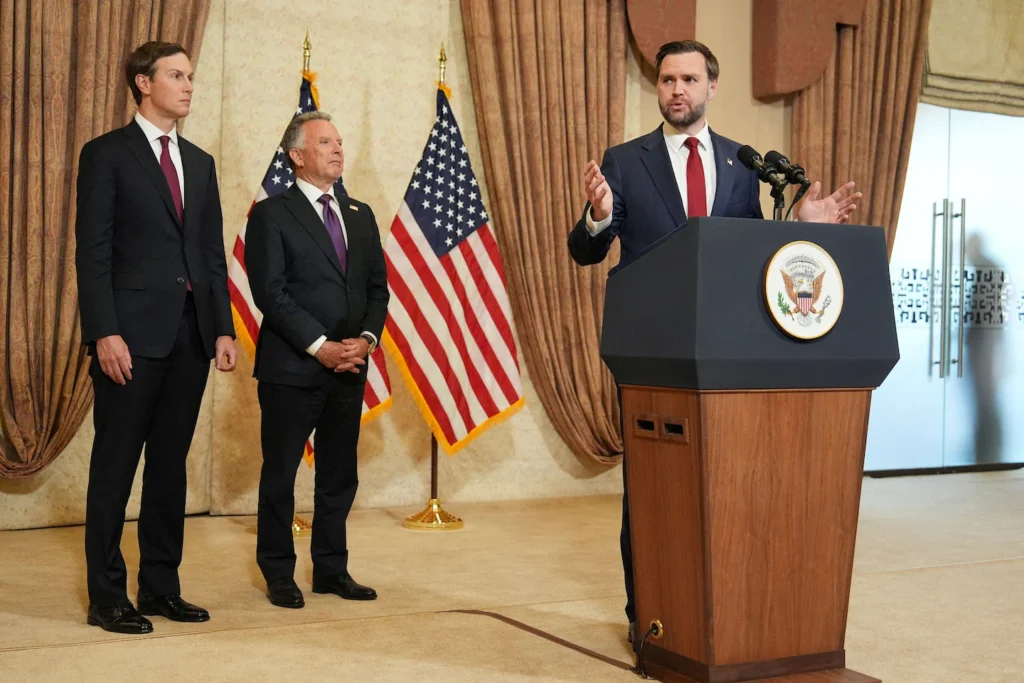
Iranian Foreign Ministry spokesperson Esmaeil Baqaei officially announced on Saturday, April 25, 2026, that no direct negotiations are scheduled with United States representatives in Islamabad despite the arrival of high-level delegations from both nations. The statement was issued just as U.S. special envoy Steve Witkoff and presidential advisor Jared Kushner prepared to depart for the Pakistani capital to participate in a second round of peace talks aimed at ending the ongoing regional conflict.
While the White House previously indicated that the envoys were traveling to engage in direct conversations, Baqaei clarified that Iranian Foreign Minister Abbas Araghchi will instead meet with Pakistani officials to convey Tehran’s specific observations and concerns. The Iranian government maintains that any progress toward a settlement is contingent on the removal of the current U.S. naval blockade that has severely restricted Iranian port activity and global energy shipments.
Real-time updates on the diplomatic arrivals and the status of the regional blockade are being tracked by the Associated Press and other international news agencies.
The latest diplomatic maneuvering follows a series of inconclusive meetings held two weeks ago in the same city which featured Vice President JD Vance and Iranian parliament speaker Mohammad Bagher Ghalibaf.
For this current mission, President Donald Trump opted not to send the Vice President, a decision that U.S. officials suggest reflects the lower level of these preliminary talks and a desire to manage expectations after the previous failure to reach a deal. Despite the Iranian public denial of a direct meeting, senior U.S. officials have told Reuters that the delegation received confirmation from Tehran that a conversation would indeed occur.
President Trump remains optimistic about the potential for a breakthrough, stating recently that Iran is likely preparing to make a substantial offer to end the hostilities. However, the semi-official Tasnim news agency in Iran has reinforced the government’s stance by reporting that no formal request for a direct meeting with American officials has been accepted due to what they described as the arrogant posture of the United States.
Pakistan continues to serve as the primary mediator between the two powers, with local authorities placing Islamabad under a near-lockdown early Saturday to secure the high-profile delegates. Pakistani Foreign Minister Ishaq Dar met with Araghchi on Friday at the Serena Hotel to discuss the logistics of the indirect communication channel and the broader implications for Middle Eastern stability.
The ongoing conflict has already disrupted approximately 20 percent of the world’s oil and gas supply, placing immense pressure on both Washington and Tehran to reach a sustainable agreement before the three-week ceasefire extension expires. Defense Secretary Pete Hegseth recently emphasized that Iran still has a window of opportunity to secure a favorable deal if it agrees to meaningful and verifiable changes to its nuclear program. Comprehensive analysis of the economic impact of the war and the evolving terms of the peace talks is available through The Washington Post and Fox News live updates.