

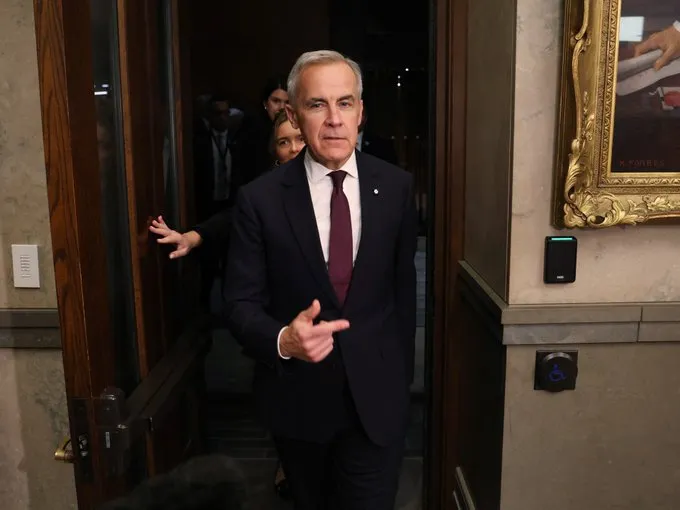
Canadian Prime Minister Mark Carney Secures Crucial Budget Vote, Narrowly Averting Snap Election
Canadian Prime Minister Mark Carney successfully navigated a high-stakes confidence vote on his first federal budget late Monday evening, with the motion passing narrowly by a vote of 170-168. The crucial victory for the minority Liberal government averts the threat of a snap election and ensures that the government can proceed with its fiscal blueprint, which includes tens of billions in new infrastructure and housing spending.
The Canadian Parliament voted on Monday to approve Prime Minister Mark Carney’s inaugural federal budget, confirming the stability of the minority Liberal government and successfully staving off the possibility of an immediate Christmas election. The vote, which was considered a matter of confidence in the government, passed in the House of Commons by a tight margin of 170 votes to 168, relying on critical last-minute support from the Green Party leader Elizabeth May and abstentions from several opposition members. The close result concludes weeks of intense speculation and drama concerning the stability of the government, which took power in the spring after the Liberals narrowly failed to win an outright majority and has since been scrambling to secure the necessary support for its major legislative initiatives.
The passage of the budget was contingent on political maneuvering, culminating hours before the vote when Prime Minister Carney publicly committed in the House of Commons to ensuring Canada meets its Paris Agreement climate commitments. This firm pledge was enough to sway Green Party Leader Elizabeth May, who had previously indicated she would vote against the fiscal plan due to environmental concerns, providing the government with a crucial additional vote. Furthermore, the final result was influenced by New Democratic Party (NDP) abstentions, as the interim leader, Don Davies, stated that while the party could not support the budget’s contents, they did not want to plunge the country into a second election in less than a year, particularly given the ongoing global economic and political uncertainty. The approved budget outlines a significant increase in the federal deficit, projecting a $78 billion shortfall for the 2025-2026 fiscal year, money intended to fund billions in new spending on housing, infrastructure projects, and defense, largely aimed at insulating the Canadian economy from the ongoing impact of trade disputes with the United States.