Andy Burnham Assumes Office as UK Prime Minister
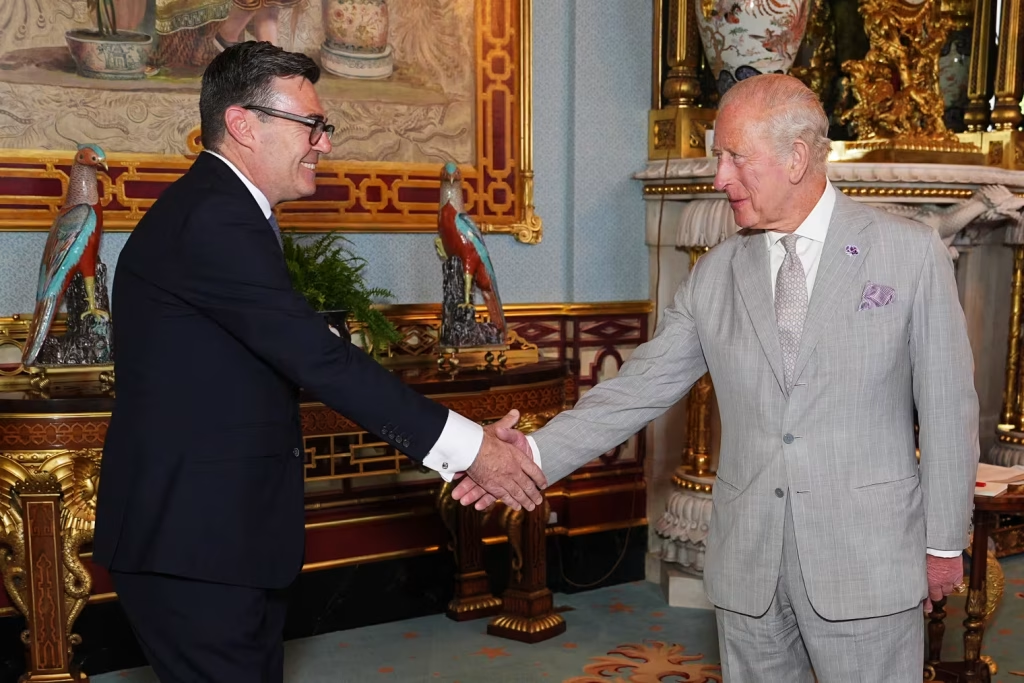
Former Greater Manchester Mayor Andy Burnham officially assumed office as the Prime Minister of the United Kingdom on Monday, July 20, 2026. Following an audience with King Charles III at Buckingham Palace, where he was invited to form a government, Burnham became the country’s seventh prime minister in ten years. His ascension follows the departure of outgoing Prime Minister Keir Starmer, who announced his resignation amid declining public approval.
Transition of Power and Leadership Bid
Special Conference: Burnham was confirmed as the new leader of the Labour Party during a special conference in central London on July 17, 2026, after securing overwhelming backing from party lawmakers.
Parliamentary Return: To be eligible for the leadership contest, Burnham engineered a return to frontline national politics by winning a parliamentary seat in a June 2026 by-election, having previously served as an MP before stepping down in 2017 to focus on his role as mayor.
Royal Appointment: Following Starmer’s formal resignation, Burnham met with King Charles III to seal the transfer of executive power before delivering his inaugural address outside 10 Downing Street.
Immediate Challenges and Agenda
In his initial remarks, Burnham emphasized a departure from a decade of political turbulence, pledging to restore stability and rebuild public confidence in governance. Widely recognized during his tenure as mayor by the moniker “King of the North”, Burnham has signaled an intent to decentralize state authority.
His domestic agenda centers on regional devolution, economic growth, and bringing key public utilities back under state oversight, starting with debt-laden Thames Water. The new prime minister steps into office with the Labour Party facing significant pressures, tasked with steering the administration through persistent economic headwinds ahead of the next scheduled general election in 2029.