Iran Threatens to Quit Nuclear Treaty and Break US Naval Blockade
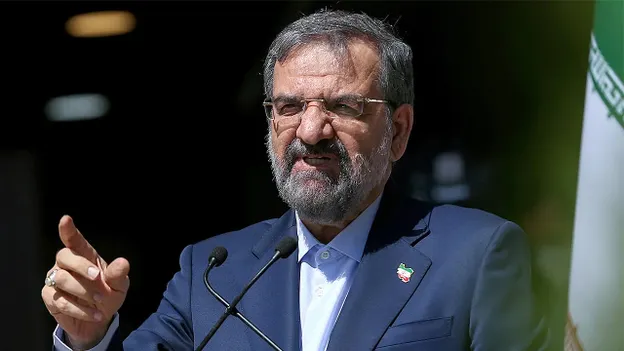
Iran has threatened to completely withdraw from the global Nuclear Non-Proliferation Treaty and initiate aggressive military maneuvers to break the ongoing United States naval blockade in the Strait of Hormuz. Major General Mohsen Rezaei, a senior military adviser to Iranian Supreme Leader Ayatollah Mojtaba Khamenei, issued the stark warning on Sunday, asserting that managing the strategic waterway remains Tehran’s absolute legal right. The fiery rhetoric from the Islamic Revolutionary Guard Corps leadership highlights a deep internal rift in Tehran, complicating recent announcements by President Donald Trump that a comprehensive bilateral peace framework was largely negotiated. Rezaei cautioned that if diplomatic avenues fail to lift the economic stranglehold on Iranian ports, a renewed conflict will begin directly at the strait and rapidly expand across the Bab el-Mandeb and into the broader Indian Ocean.
The sudden diplomatic escalation occurs as hard-line factions within the Iranian government push back aggressively against an emerging Memorandum of Understanding brokered by Pakistani mediators. State-affiliated media networks in Tehran have explicitly denied reports that Iran committed to removing its highly enriched uranium stockpile or suspending its domestic nuclear enrichment program for an extended ten-to-twenty-year window. Senior Iranian sources confirmed that the Supreme National Security Council is convening to review the preliminary draft text, but hard-liners insist that no nuclear concessions will be validated until Washington permanently dissolves its counter-blockade. The U.S. Navy has rigorously enforced the maritime shipping blockade since mid-April under the direction of Central Command, intercepting dozens of commercial vessels to block all seaborne trade to and from Iranian coastal terminals.
The economic impact of the dual blockades has severely battered Iran’s financial stability, draining an estimated 500 million dollars in daily oil revenues and triggering widespread domestic anxiety. While moderate officials in Tehran hope to use the mediated talks to secure immediate sanctions relief and unlock billions in frozen international assets, the Revolutionary Guard continues to project an uncompromising military posture. Security analysts warn that the operational window to finalize a stable 60-day ceasefire is rapidly narrowing as both nations face intense domestic political pressure ahead of upcoming regional holidays. If the current round of talks collapses over these rigid red lines, maritime security sources anticipate an immediate resumption of drone and missile strikes targeting critical commercial shipping lanes and international infrastructure throughout the Persian Gulf.