
Greenland Protests Erupt With Make America Go Away
Greenland protests Trump purchase 2026
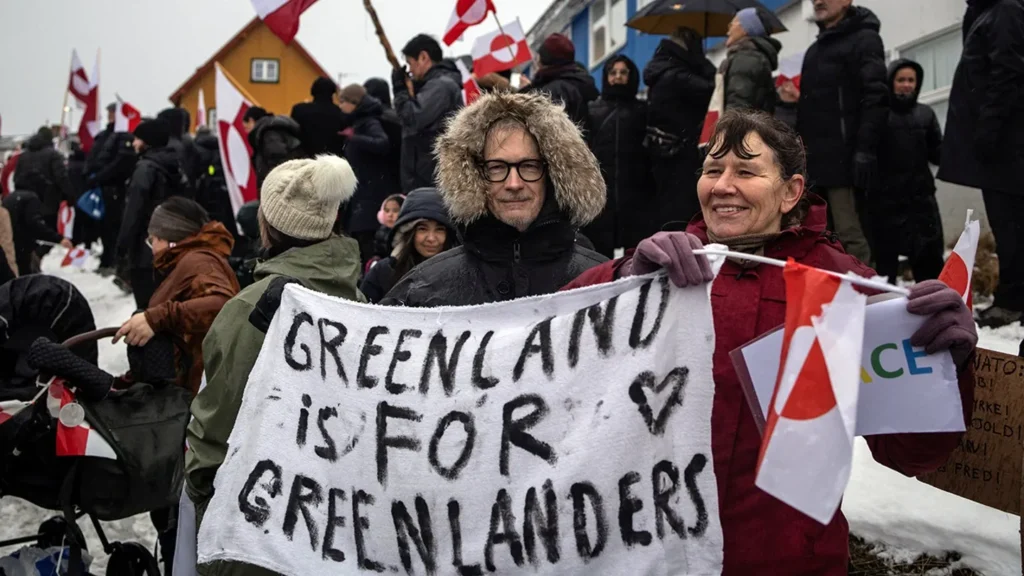
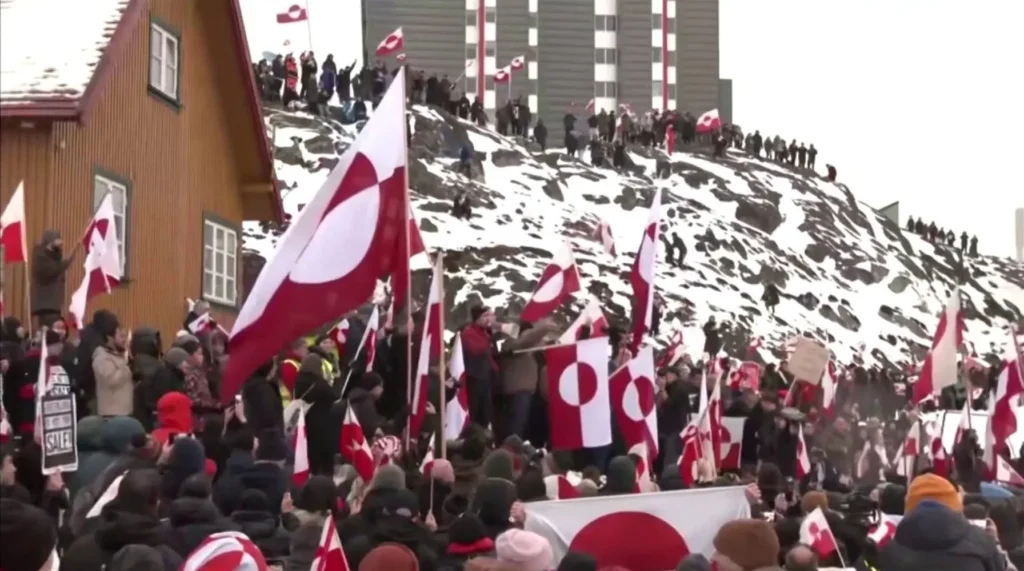
The capital of Greenland, Nuuk, was transformed into a sea of red-and-white national flags on Saturday, January 17, 2026, as thousands of residents marched to reject U.S. President Donald Trump’s renewed demands to purchase the autonomous territory. In a pointed parody of the President’s own campaign merchandise, many demonstrators wore red baseball caps emblazoned with the words “Make America Go Away.” The protest, described by local police as the largest in the city’s history, saw nearly a third of Nuuk’s population take to the streets in freezing rain to deliver a clear message to the White House: “We are not interested in being Americans.” Greenland’s Prime Minister, Jens-Frederik Nielsen, joined the marchers, waving the Greenlandic flag and leading chants of “Greenland is not for sale” as the procession moved toward the U.S. Consulate.
The demonstration follows an extraordinary escalation in diplomatic pressure from Washington. On the same day as the protests, President Trump used social media to announce a new tariff regime targeting eight European allies—Denmark, Norway, Sweden, France, Germany, the United Kingdom, the Netherlands, and Finland—over their opposition to the sale. Starting February 1, 2026, goods from these nations will face a 10% import tax, which the President warned would rise to 25% on June 1 if a deal for the “Complete and Total purchase of Greenland” is not reached. Trump has framed the acquisition as a “national security necessity” to counter Russian and Chinese influence in the Arctic, even suggesting that military means could be considered “one way or the other” to secure the mineral-rich island.
Solidarity protests erupted simultaneously across Europe and North America, with significant rallies held in Copenhagen, Aarhus, and the Canadian Arctic city of Iqaluit. In Copenhagen, protesters marched toward the U.S. Embassy carrying signs reading “No Means No” and “Hands Off Greenland,” while Danish Foreign Minister Lars Løkke Rasmussen expressed “surprise” at the tariff threats following what he described as a “constructive” meeting with U.S. officials earlier in the week. The European Union has signaled a unified response, with French President Emmanuel Macron stating that “no amount of intimidation” would influence European sovereignty. Meanwhile, a bipartisan group of 11 U.S. lawmakers currently visiting Denmark emphasized that the President’s rhetoric does not reflect the views of the majority of Americans, with recent polls showing less than 20% approval for the annexation of the territory.
As the “Greenland Crisis” enters its most volatile phase, the impact on international alliances is becoming increasingly severe. The official Danish threat assessment for 2026 has, for the first time, classified the United States as a threat to national security, alongside Russia and China. For the people of Greenland, the struggle has become a matter of fundamental identity and self-determination. “This is our home, not a toy,” stated Naja Holm, a civil servant participating in the Nuuk rally. With the first round of tariffs set to take effect in just two weeks, the standoff between the White House and its closest NATO allies appears headed for a prolonged economic and diplomatic confrontation that could redefine Arctic geopolitics for decades.