
Trump Backs Down on Greenland Force and Tariffs
Trump Greenland Davos speech 2026
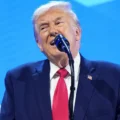
In a move that has provided significant relief to global markets and his own party, President Donald Trump officially de-escalated his push to acquire Greenland during a keynote address at the World Economic Forum in Davos on Wednesday, January 21, 2026. For the first time since re-igniting the territorial dispute, the President explicitly ruled out the use of military force, stating that while the U.S. is “unstoppable,” he has no intention of using “excessive strength” to seize the island [3.2, 3.4]. Furthermore, in an abrupt about-face, Trump announced a delay of the 10% tariffs previously scheduled to take effect on February 1 against eight European allies—including Denmark, the UK, and Germany—citing a new “framework for a future deal” on Arctic security reached with NATO Secretary-General Mark Rutte [3.2, 3.3].
The President’s shift has allowed congressional Republicans to “exhale” after weeks of mounting internal dissent. Prior to the Davos speech, high-ranking GOP figures had issued unusually sharp warnings against the administration’s aggressive tactics. Former Senate Republican Leader Mitch McConnell compared a potential Greenland seizure to a foreign policy disaster that would “incinerate” the trust of loyal allies, while North Carolina Senator Thom Tillis labeled the idea of coercive action “beyond stupid” [4.2, 4.4]. Nebraska Representative Don Bacon even suggested that an invasion could lead to impeachment, noting that Republicans would not tolerate such a provocation against a NATO ally [1.5, 4.4]. The de-escalation has successfully neutralized a burgeoning legislative rebellion, with Senator Lindsey Graham—previously a critic of using force—announcing he is now “convinced” by Trump’s case for a legal, negotiated purchase [2.4].
While military action and immediate tariffs are off the table, the President emphasized that his desire for “right, title, and ownership” of Greenland remains intact [2.3, 3.4]. During his 70-minute address, he characterized the island as a “piece of ice” essential for “world protection” and urged Denmark to enter “immediate negotiations” [2.3, 2.5]. Trump also maintained a transactional tone, warning that while the U.S. would be “very appreciative” of a “yes,” it would “remember” a “no” from its allies [2.3, 3.3]. Despite the lingering rhetoric, the removal of the military and economic threats has been welcomed by European leaders as a “positive” step, though Danish Foreign Minister Lars Løkke Rasmussen noted that the underlying challenge to territorial integrity remains [3.3].
The de-escalation has also had an immediate impact on financial markets, with Wall Street stocks opening higher on Wednesday following the removal of the imminent tariff threat [3.5]. Treasury Secretary Scott Bessent, who had previously defended the Greenland push as a “geopolitical chess match,” shifted focus toward the “framework” for Arctic cooperation, suggesting the administration is seeking an off-ramp that prioritizes security over annexation [3.5, 4.5]. As the 2026 World Economic Forum continues, the focus has shifted from a looming trade war to the specifics of the new NATO-U.S. Arctic security agreement, though trust between Washington and its European counterparts remains at a historic low [3.4].