
Trump’s Vague Iran Exit Timeline Spooks Markets
Trump Iran war withdrawal timeline market reaction April 2026
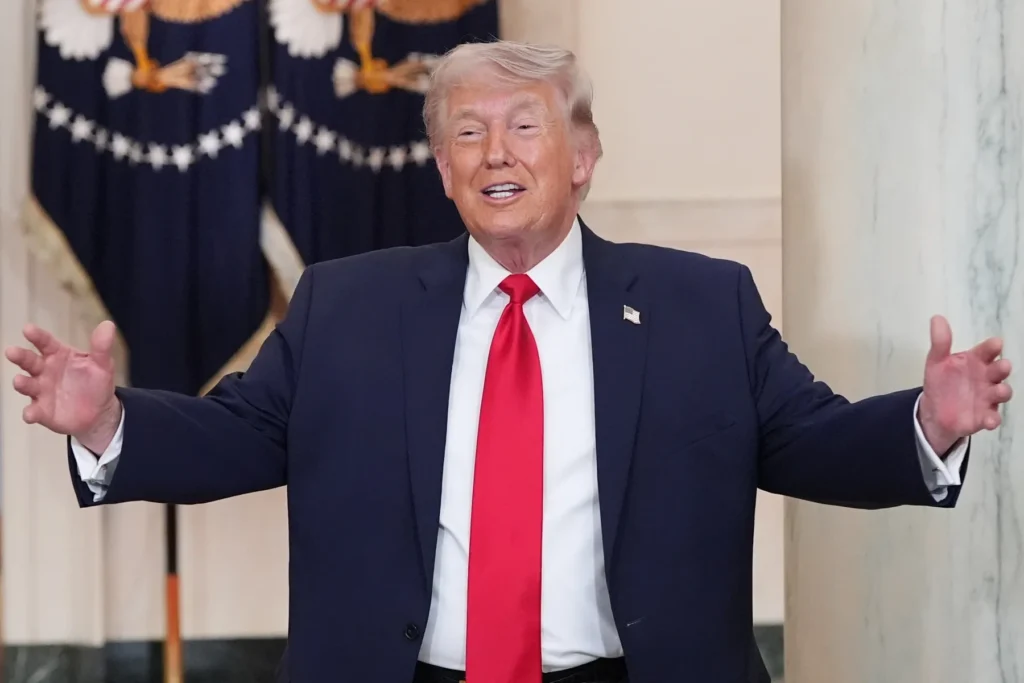
WASHINGTON — President Donald Trump’s latest primetime address has left global markets in a tailspin and Washington in a state of high anxiety. While the President used his Wednesday night speech to declare that the “core strategic objectives” of Operation Epic Fury are nearing completion, his refusal to provide a concrete exit strategy—combined with a pledge to hit Iran “extremely hard” for another two to three weeks—has fueled fears of a prolonged and unpredictable escalation.
In the hours following the address, Brent crude oil futures spiked 5%, surging past $106 a barrel, as traders reacted to the President’s suggestion that the U.S. might withdraw without first securing the reopening of the Strait of Hormuz. On Wall Street, the optimism of early Wednesday trading evaporated; S&P 500 futures dropped 1.1%, while the Nikkei 225 in Tokyo plummeted nearly 2% at the start of the Asian trading day.
The “Two-Week” Trap
The primary source of the “angst” cited by analysts is the President’s contradictory messaging. Trump claimed the Iranian navy is “absolutely destroyed” and the regime is “the bully no longer,” yet he simultaneously signaled an intensification of airstrikes. “We’re going to bring them back to the Stone Age where they belong over the next few weeks,” Trump stated, even as he promised American families that the conflict was “very shortly” coming to an end.
“The markets hate uncertainty, and the President just gave them a masterclass in it,” said one senior analyst at Morningstar. “Is it two weeks of peace talks or two weeks of total war? The speech didn’t clarify; it only raised the stakes.”
Political Backlash on Both Sides
The reaction on Capitol Hill was swift and divided. Senator Mark Warner (D-VA) issued a stinging rebuke, arguing that the President owes the American people a transparent plan for a conflict that has already claimed the lives of 13 U.S. service members and sent domestic gas prices soaring. “We are seeing the consequences ripple through the economy with no clear end in sight,” Warner stated.
Even within the Republican party, the “vague timeline” caused friction. While Senator Ted Cruz praised the President’s “decisive success,” Marjorie Taylor Greene expressed frustration, noting that the speech focused heavily on military power but offered “nothing” in the way of concrete measures to lower the cost of living for Americans burdened by the war’s economic fallout.
A “Paper Tiger” Alliance
Further complicating the geopolitical landscape was Trump’s renewed threat to pull the United States out of NATO. Labeling the 77-year-old alliance a “paper tiger,” the President suggested that if European allies want the Strait of Hormuz reopened, they should “grab it and cherish it” themselves.
Current intelligence reports from Windward and UANI indicate that Iran has successfully entrenched a “selective, permission-based transit regime” in the Strait. Under this system, vessels—particularly those not aligned with U.S. interests—are reportedly forced to pay “substantial maritime fees” or provide “tacit clearance” through IRGC-controlled waters. Trump’s stance that this is “no longer an American problem” has sparked fears among G7 leaders of a permanent shift in global maritime security.
As strikes continue to rock Tehran and Iranian missiles target commercial tankers like the AQUA 1 near Qatar, the world remains on edge. The President’s promised “decisive” update has, for many, only muddied the waters of the most significant military conflict of the decade.