
South Korea and Japan Scramble Jets in Response to 10th Joint Russia-China Air Patrol
South Korea and Japan deployed fighter jets on Tuesday in response to a major joint military patrol conducted by Russian and Chinese warplanes over international waters near their respective airspaces. This exercise marks the tenth joint strategic air patrol carried out by the two nations since 2019, but it occurs amid notably heightened tensions, particularly between Beijing and Tokyo.
The Flight and Scrambles
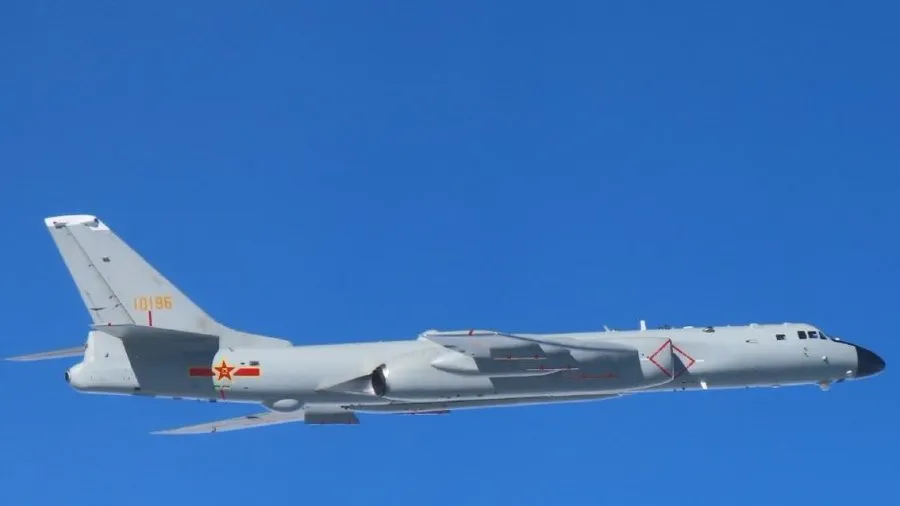
South Korea’s Joint Chiefs of Staff (JCS) confirmed that seven Russian military aircraft and two Chinese military aircraft entered and exited the Korean Air Defense Identification Zone (KADIZ) at approximately 10 a.m. local time on Tuesday. While the aircraft, which reportedly included Russian Tu-95 bombers and Chinese H-6 bombers, did not violate South Korea’s sovereign territorial airspace, Seoul’s military deployed its fighter jets to take “tactical measures in preparation for any contingencies.” The foreign planes intermittently entered and left the KADIZ, an area where aircraft are asked to identify themselves, for about an hour before departing.
Simultaneously, the Japanese Defense Ministry (MoD) confirmed it had scrambled jets to monitor the Russian and Chinese forces. The MoD reported that two Russian Tu-95 strategic bombers and two Chinese H-6 bombers flew together from the Sea of Japan into the East China Sea and then conducted a “long-distance joint flight” over the Western Pacific, passing between Japan’s Okinawa and Miyako islands. Japanese Defense Minister Shinjiro Koizumi stated on social media that the joint operations were “clearly intended as a show of force against our nation, which is a serious concern for our national security.”
Context of Rising Tensions
Both Moscow and Beijing confirmed the eight-hour patrol, stating it was conducted in strict accordance with international law and was part of an annual bilateral cooperation plan. However, the timing of the flight escalates regional friction, particularly following a separate incident just days earlier where Japan alleged that Chinese fighter jets had locked fire-control radar on Japanese military aircraft near a Chinese aircraft carrier operating near Okinawa. This accusation, denied by Beijing, highlights the escalating military posturing and lack of a reliable deconfliction hotline between the two East Asian powers, making these routine joint patrols increasingly sensitive. The joint flights are seen by Western security analysts as a display of the deepening military and defense ties between China and Russia.