
Reclaim MLK Rallies Sweeping US Amid Trump Policy
Reclaim MLK Day 2026 rallies
The 40th anniversary of the federal Martin Luther King Jr. holiday on Monday, January 19, 2026, has transformed from a day of traditional service into a nationwide “day of resistance” as communities “reclaim” Dr. King’s radical legacy to protest the current political climate. Under the banner of “Reclaim MLK,” a coalition of civil rights organizations, including the Movement for Black Lives and the NAACP, has organized mass demonstrations in cities such as Atlanta, Chicago, Oakland, and Newark. Unlike past years, which often focused on sanitized reflections of King’s “I Have a Dream” speech, the 2026 rallies are centering on his 1967 critiques of “militarism, racism, and capitalism.” Organizers state that the current administration’s “scorched earth” approach to diversity initiatives, coupled with the aggressive deployment of federal agents in mostly Black-led cities, necessitates a return to direct action and civil disobedience to protect the social progress of the last century.
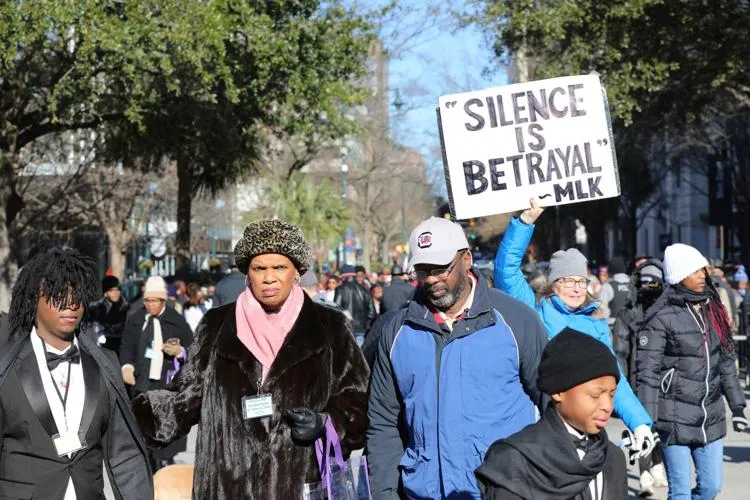
The epicenter of this year’s holiday tension is Minneapolis, where the recent fatal shooting of 37-year-old Renee Nicole Good by an ICE agent has sparked continuous unrest. While the city proceeded with its 36th annual MLK Holiday Breakfast at the Minneapolis Convention Center, featuring keynote speaker Soledad O’Brien, the atmosphere outside was marked by thousands of protesters demanding the removal of 2,000 federal agents sent to the city under “Operation Metro Surge.” In Newark, New Jersey, more than 125 organizations endorsed the “Martin Luther King March of Resistance,” led by the People’s Organization for Progress. Marchers there specifically targeted the Trump administration’s immigration policies and its “draconian” economic agenda, framing their struggle as a direct continuation of King’s “Poor People’s Campaign.”
Compounding the friction are several symbolic and policy changes enacted by the White House that critics view as an intentional diminishment of Dr. King’s visibility. The Trump administration recently removed Martin Luther King Jr. Day and Juneteenth from the National Park Service’s “fee-free” entry calendar, replacing them with free entry on the President’s birthday and Flag Day. Additionally, reports of the removal of the MLK bust from the Oval Office have further galvanized activists who argue the administration is attempting to erase the history of the Civil Rights Movement. In response, governors in states like California have defied the federal government by declaring free entry to state parks on the holiday, positioning their states as “sanctuaries” for the ideals King championed.
While some conservative groups have urged a “colorblind” observation of the holiday focused solely on individual character, the prevailing theme of the 2026 commemorations remains one of urgent political mobilization. From the “Radical Legacy Weeks of Action” in Oakland to the “Gospel Explosion” in Fresno, the day has become a platform to address contemporary crises, including the mass deportation of immigrants and the rollback of voting rights. As the sun sets on the 2026 MLK holiday, the sheer scale of the “Reclaim MLK” movement suggests a fundamental shift in how the civil rights icon is celebrated, moving away from commemorative panels and toward a renewed, confrontational struggle for what organizers describe as “humanity and freedom from a fascist regime.”