

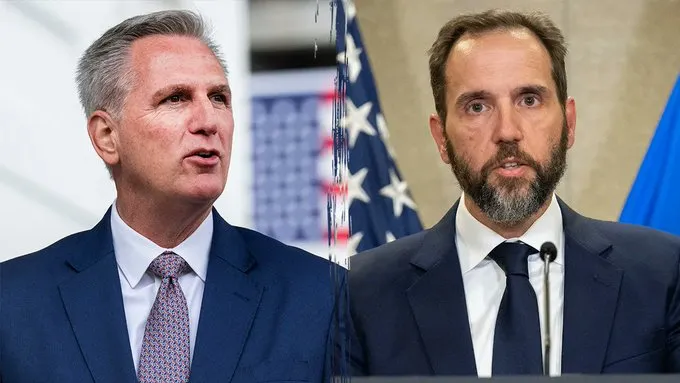
Former Special Counsel Jack Smith Allegedly Sought Phone Records of Ex-House Speaker Kevin McCarthy in January 6 Probe
The investigation into actions surrounding January 6 has taken a new turn following revelations that Jack Smith, who served as Special Counsel overseeing part of the probe, sought toll records from the personal cellphone of then-House Speaker Kevin McCarthy. Documents disclosed by the FBI indicate that on January 24, 2023, Smith’s team submitted a request for “toll records for the personal cell phones of U.S. Speaker of the House Kevin McCarthy (AT&T) and U.S. Representative Louie Gohmert (Verizon).” This information comes from a “Significant Case Notification” prepared by the FBI’s Criminal Investigative Division on May 25, 2023. The revelation has intensified scrutiny of the investigation code-named “Arctic Frost,” which has previously drawn criticism from Republican lawmakers for its scope and targeting of GOP officials.
According to a fact-checking review, the FBI did not conduct live wire-taps but instead performed a “preliminary toll analysis” of phone data for select lawmakers between January 4–7, 2021. The analysis covered metadata such as call times, recipients, and durations—but did not include the content of those calls. Legal experts emphasize that while the call logs were collected, they were not intercepted in real time.
Kevin McCarthy condemned the attempt to access his records, calling it “a blatant weaponizing of the Justice Department to attack political opponents” and asserting that it “demands real accountability.” He affirmed his expectation that Congress will hold hearings and obtain documents in the investigation of Smith’s actions.
Republican oversight leaders, notably Senate Judiciary Committee Chair Chuck Grassley, have termed the probe “arguably worse than Watergate,” pointing to the breadth of subpoenas and metadata requests issued under the Arctic Frost investigation.
At present, the DOJ and Smith’s legal team have not publicly provided a comprehensive explanation for the legal basis of the records requests. Telecommunications carriers such as AT&T declined to comply with certain subpoena requests after raising questions about lawmakers’ involvement, and in some cases, records were not produced.
This development raises fundamental questions regarding the balance between national security investigations and the constitutional protections afforded to members of Congress. Among the issues now under debate are who approved the procedures, what oversight existed, and whether the collection of data respected separation-of-powers constraints.