
China’s Strategic Gains in the Iran War
China geopolitical strategy Iran war 2026
The 2026 Iran war has functioned as a strategic inflection point for Beijing, allowing China to accrue significant geopolitical and economic advantages while maintaining a restrained diplomatic posture. As the conflict transitioned into a ceasefire following the June 2026 memorandum of understanding (MoU) between the United States and Iran, analysts highlight that China has successfully utilized the instability to advance its long-term objectives without assuming the heavy burdens of a formal security guarantor.
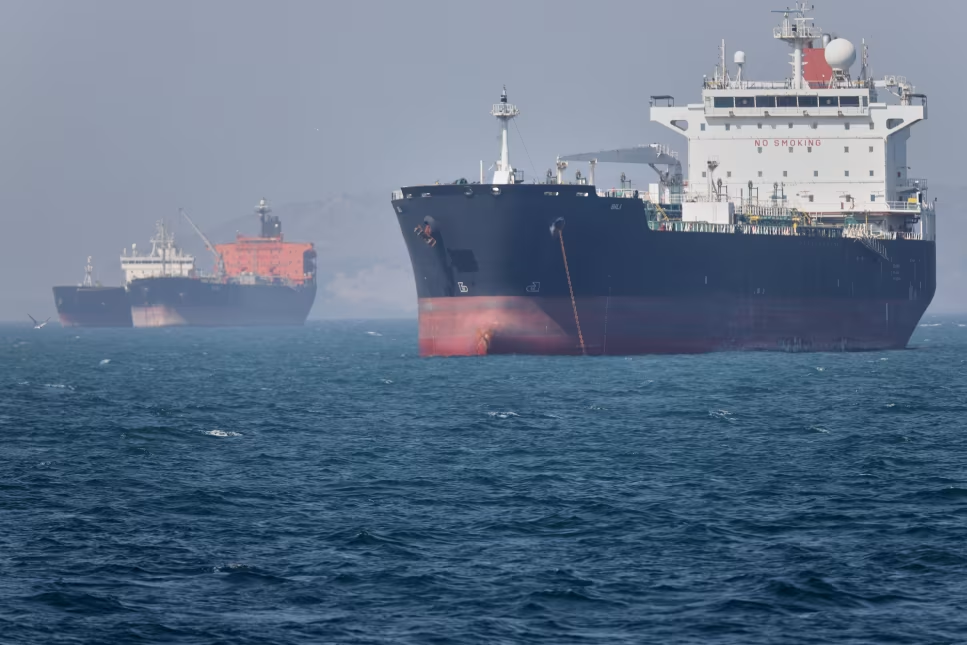
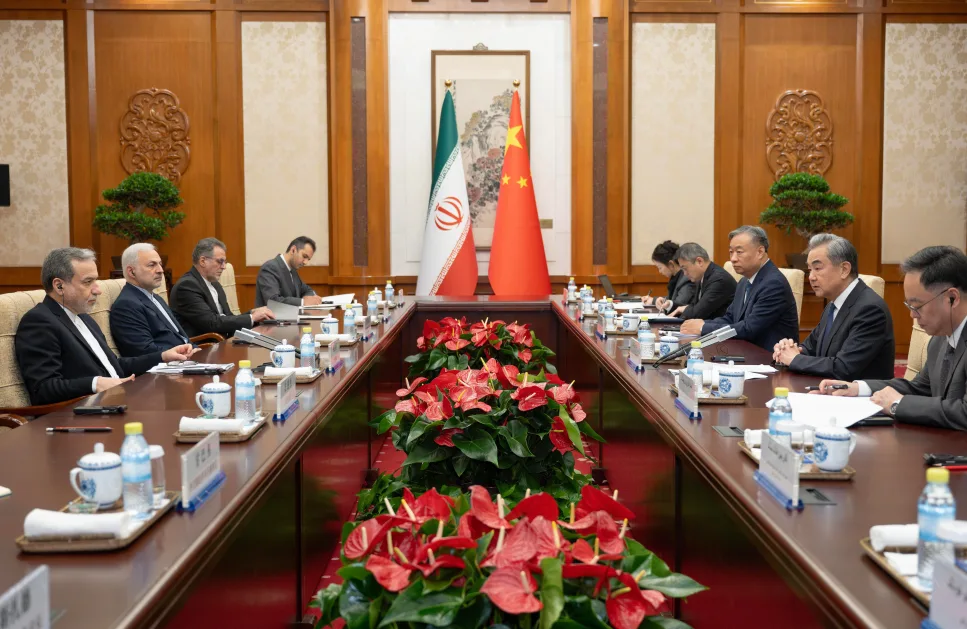
Beijing’s primary strategic gain has been the widening of a lane to assert itself as a credible, neutral mediator. By consistently calling for the reopening of the Strait of Hormuz and promoting President Xi Jinping’s four-point peace proposal, China has positioned itself as a “builder of peace”. This diplomatic maneuvering has resonated with Gulf states, which are increasingly seeking to diversify their security partnerships as they reconsider their historic reliance on the United States. Beijing has leveraged this shift to advocate for a new, inclusive regional security architecture that aligns with its own Global Security Initiative, potentially reducing long-term U.S. influence in the Persian Gulf.
Beyond diplomacy, the conflict has served as a practical learning ground for Beijing. Military and political observers in China have closely analyzed U.S. strike patterns, air defense performance, and logistical responses to the blockade of the Strait of Hormuz. These insights are viewed as critical data points for preparing for a potential Taiwan contingency, particularly regarding the challenges of navigating maritime chokepoints and asymmetric warfare. Simultaneously, the disruption of global energy markets has accelerated the demand for clean energy alternatives. As China currently holds over 80% of the manufacturing capacity for critical components in the solar, wind, and battery sectors, the heightened global energy insecurity has effectively incentivized a faster transition toward Chinese-made renewable products.
Despite allegations of providing dual-use technology and geospatial intelligence to Iran—which Beijing has consistently denied or characterized as fabricated—China has successfully balanced its economic ties with Tehran while avoiding direct military intervention. By maintaining a “friend to all and enemy to none” posture, China has preserved its vital energy imports and trade flows while ensuring its resources remained concentrated on its broader geopolitical rivalry with the United States. As the region enters a post-war phase, Beijing appears prepared to capitalize on the restored stability, viewing the conflict not as a disruption, but as a catalyst for expanding its footprint in the Middle East and beyond.