
Supreme Court Skeptical of Trump’s Birthright Citizenship Order
Trump v. Barbara Supreme Court skepticism 2026
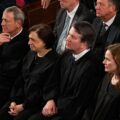
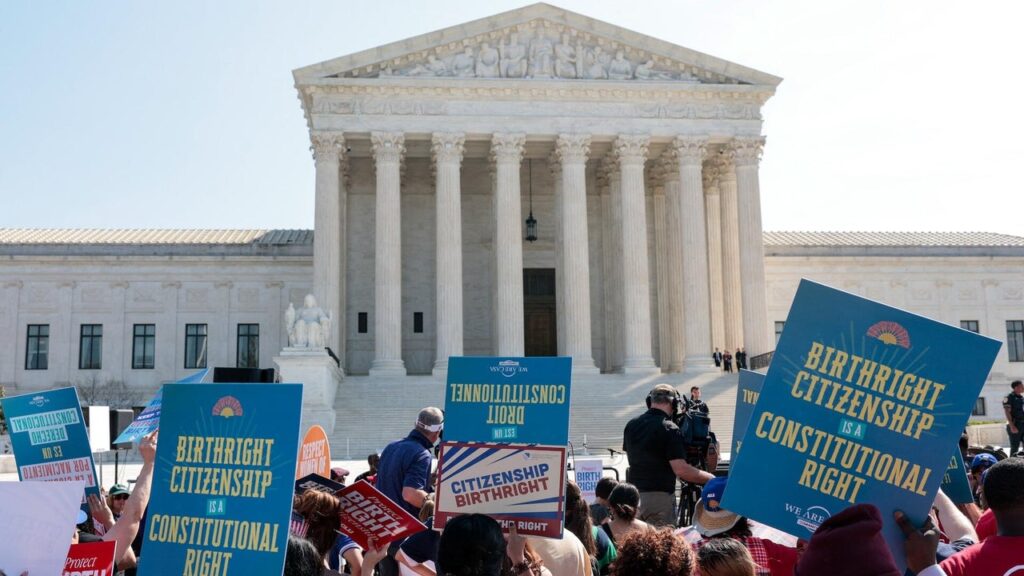
The Supreme Court appeared deeply skeptical on Wednesday, April 1, 2026, as it heard oral arguments in the landmark case Trump v. Barbara. Despite President Trump’s historic decision to attend the hearing in person, a majority of the justices—including three members of the court’s conservative wing—questioned the administration’s attempt to redefine the 14th Amendment through executive action. Solicitor General D. John Sauer argued that the Citizenship Clause’s requirement that individuals be “subject to the jurisdiction” of the U.S. implies a “consensual allegiance” that children of undocumented immigrants do not possess. However, according to reports from the 19th News, this interpretation faced immediate pushback from Chief Justice John Roberts and Justices Neil Gorsuch and Amy Coney Barrett.
The questioning from the bench focused heavily on the logistical and legal inconsistencies of the administration’s “permanent domicile” requirement. Chief Justice Roberts notably described some of the government’s provided examples as “very quirky,” while Justice Barrett raised a pointed concern regarding how the order would treat the children of individuals brought into the country illegally through human trafficking. On the liberal side of the bench, Justice Sonia Sotomayor pressed the Solicitor General on whether the administration intended to retroactively “unnaturalize” current citizens—a move Sauer denied—while Justice Ketanji Brown Jackson questioned the invasive nature of enforcement, asking, “Are we bringing pregnant women in for depositions?” The ACLU’s Cecillia Wang, representing the plaintiffs, maintained that the 14th Amendment provides a “categorical guarantee” that cannot be dismantled by any president.
The skeptical reception at the high court occurred just hours before President Trump delivered a national address on the progress of Operation Epic Fury in Iran. During that speech, the President briefly pivoted from military updates to the judicial hearing, calling the current interpretation of birthright citizenship “stupid” and a “magnet” for illegal immigration. Legal analysts suggest that if the Court’s skepticism holds, the executive order is likely to be struck down by the end of the term in June or July. This would be a significant blow to the administration’s domestic agenda, which has increasingly linked border security with national stability during the ongoing regional war.