
NASA Unveils Plan for First Nuclear-Powered Mars Spacecraft
NASA nuclear powered interplanetary spacecraft 2028
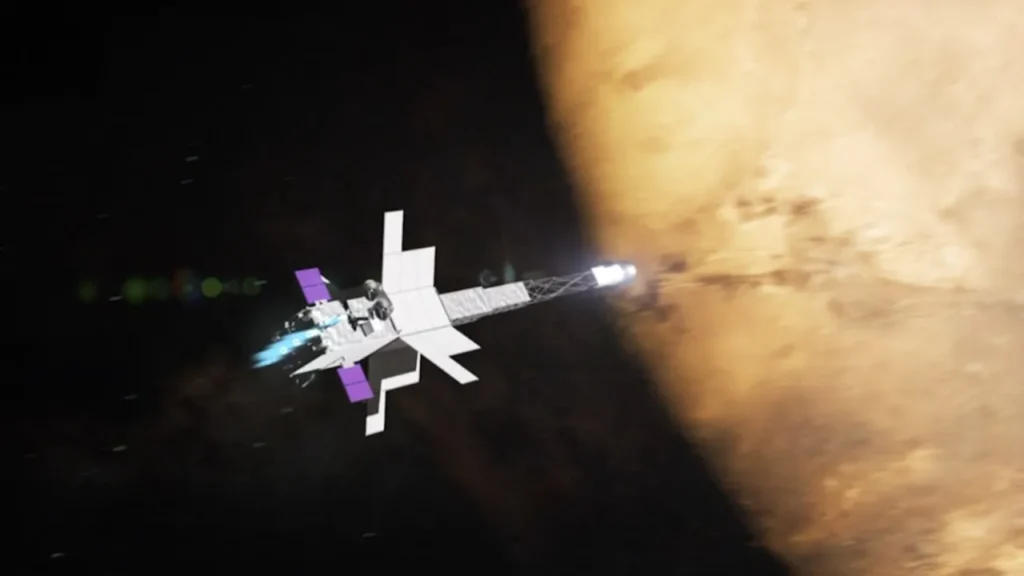
NASA Administrator Jared Isaacman announced on Tuesday, March 24, 2026, that the agency has officially commenced development on the world’s first nuclear-powered interplanetary spacecraft. The ambitious project, titled Space Reactor-1 (SR-1) Freedom, is scheduled for a landmark launch in December 2028 with the primary objective of reaching Mars. This mission represents a pivot toward Nuclear Electric Propulsion (NEP), a technology that utilizes a 20-kilowatt fission reactor to generate electricity for high-efficiency ion thrusters.
Unlike traditional chemical rockets, which rely on massive amounts of fuel for short bursts of thrust, the SR-1 Freedom is designed for long-duration, high-efficiency transport, potentially cutting deep-space travel times in half and allowing for significantly larger payloads. According to official reports from Space.com, the spacecraft will feature a long boom to separate the crew and sensitive instruments from the reactor’s radiation.
The shift toward the SR-1 Freedom follows the recent restructuring of the DRACO (Demonstration Rocket for Agile Cislunar Operations) program, a joint venture between NASA and DARPA. While DRACO originally aimed to test a Nuclear Thermal Rocket (NTR) in Earth orbit by 2027, the project faced significant technical hurdles and was placed on indefinite hold in mid-2025. DARPA officials cited the rapidly decreasing cost of heavy-lift chemical launches, such as SpaceX’s Starship, as a reason to re-evaluate the immediate necessity of NTR for cislunar maneuvers.
However, NASA’s updated strategic roadmap clarifies that for true interplanetary “interstate” travel, nuclear propulsion remains the only viable solution for sustainable, rapid transit. The agency plans to complete the final design phase for SR-1 Freedom by June 2026, with hardware assembly beginning shortly thereafter.
Beyond the Mars mission, the development of the SR-1 Freedom is part of a broader three-phase plan to establish a permanent human presence on the Moon and beyond. NASA is concurrently working with the Department of Energy to develop small fission surface power systems capable of providing continuous heat and electricity for lunar bases during the 14-day-long lunar nights.
As reported by Futurism, the success of the 2028 nuclear mission would activate a new industrial base for space-grade nuclear hardware, setting the regulatory and safety precedents required for a crewed Mars landing in the 2030s. As NASA gears up for the Artemis 2 lunar mission next week, the announcement of the SR-1 Freedom signals that the agency is officially moving past the “Moon phase” of exploration and back into a direct focus on the Red Planet.