
Trump Lashes Out at Sportscaster
Trump Knicks Sportscaster
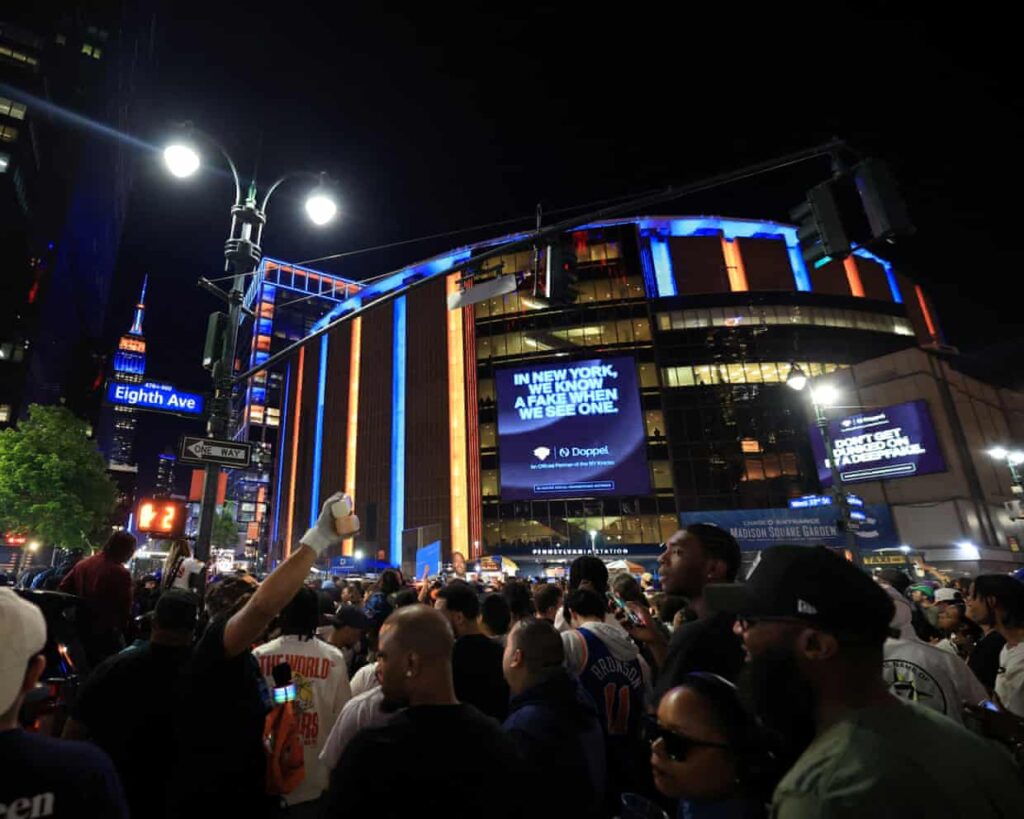
President Donald Trump’s attendance at Game 3 of the NBA Finals on Monday night triggered a wave of controversy, culminating in a sharp, public rebuke of a prominent sportscaster whom the President previously considered a favorite. The atmosphere at Madison Square Garden was tense, with the game—which saw the San Antonio Spurs defeat the New York Knicks 115-111—marked by significant security disruptions and a vociferous crowd reaction to the President’s presence. As frustration grew regarding the logistics and the team’s performance, the President redirected his ire toward media figures who had analyzed his impact on the event.
The fallout began after reports surfaced that the President’s security detail had created substantial logistical hurdles for fans, leading to the cancellation of a nearby watch party and an atmosphere of frustration inside the arena. While the President was booed by sections of the crowd during the national anthem, the ensuing media coverage focused on the chaotic environment. When one longtime media personality described the event as a “narcissistic stunt,” the President took to social media to attack the sportscaster’s credibility, labeling their commentary as “disloyal” and “totally inaccurate.” This heated exchange highlights a growing pattern of volatility in how the administration manages its relationship with public figures, particularly as the President seeks to maintain a favorable narrative around his high-profile sporting appearances, as explored in this analysis.
The tension underscores the friction between the President’s desire for positive engagement in cultural spaces and the increasingly polarized reactions he encounters at major events. With the Knicks now facing a difficult deficit in the series, the focus on the arena’s atmosphere has intensified, leaving the team and its ownership in a delicate position, as reported by local observers. For the President, the incident serves as yet another flashpoint in his evolving relationship with the media, where even formerly friendly voices are finding themselves in the crosshairs when their reporting conflicts with the administration’s desired portrayal of these public outings.