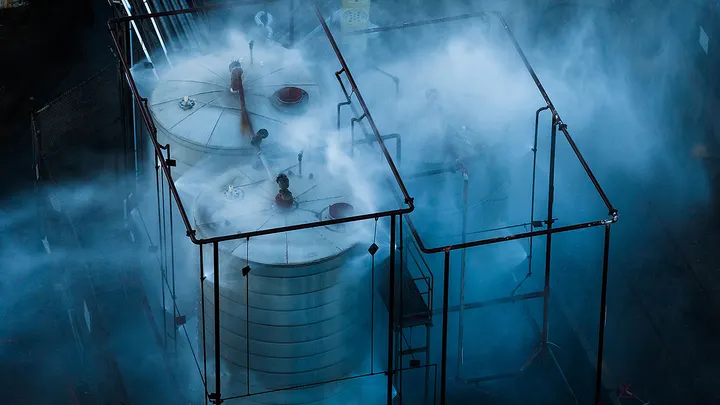
Newsom Declares Orange County Emergency Over Failing Chemical Tank
California Governor Gavin Newsom declared a state of emergency in Orange County on Saturday as emergency personnel struggle to stabilize a failing industrial storage tank that is nearing a catastrophic chemical explosion. The high-stakes crisis began at the GKN Aerospace manufacturing facility in Garden Grove, where a pressurized tank containing roughly 7,000 gallons of highly volatile methyl methacrylate experienced a dangerous chemical malfunction. Local fire officials confirmed that the internal temperature of the industrial tank has been steadily rising by an average of one degree per hour, significantly heightening the risk of an uncontrolled thermal reaction. In a public statement, Governor Newsom emphasized that the absolute safety of regional residents is the top priority, explaining that the emergency proclamation will mobilize all available state resources and open up state-owned facilities to assist displaced families.
The rapidly deteriorating situation has forced the mandatory evacuation of more than 44,000 residents across a large portion of northern Orange County, encompassing parts of Garden Grove, Anaheim, Cypress, and Westminster. Orange County Fire Authority Incident Commander Craig Covey stated that letting the tank fail without intervention is entirely unacceptable due to the immense danger posed to the surrounding community and the local environment. Firefighters initially utilized drone cameras to monitor the exterior structure, but teams had to enter the hazardous zone manually overnight to discover that the interior temperature had reached 90 degrees Fahrenheit. The chemical substance, an industrial monomer used in plastics manufacturing, is highly flammable and generates its own intense heat during polymerization, creating an exothermic loop that chemical experts call a runaway effect.
Hazardous materials teams and specialized chemists are working around the clock under extreme danger to execute a tactical operation aimed at cooling the tank and preventing a structural detonation. Regional officials explained that if the container undergoes a total thermal failure, it will either fracture and spill thousands of gallons of toxic liquid or explode violently, potentially triggering a massive chain reaction with nearby fuel reservoirs. To mitigate a potential environmental disaster, crews are proactively building extensive dikes, damming infrastructure, and sandbag barriers to divert any toxic runoff away from neighborhood storm drains and regional river channels that lead directly to the Pacific Ocean. Several emergency shelters have been established at local high schools and community centers across the region, where medical personnel are stationed to treat anyone experiencing respiratory irritation, severe dizziness, or nausea from localized chemical vapors.